Archive for February, 2013

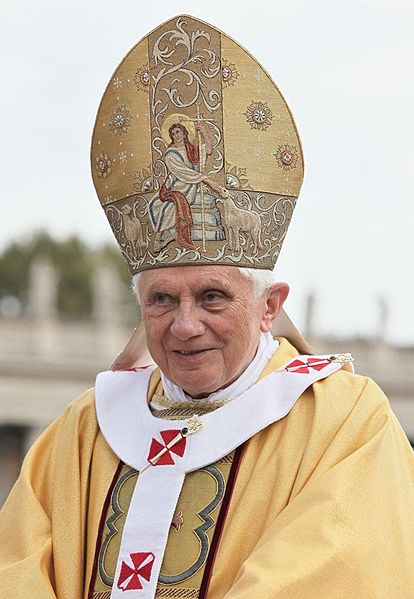
Pope Benedict XVI

Pope Benedict XVI

Last time was 600 years ago – as pretty much everyone in the Western world has now heard many times. Popes don’t resign – how can the representative of Christ, who speaks on doctrine ex cathedra, who was chosen by the Holy Spirit through the cardinals, give up his office? One Polish blogger compared the Pope’s resignation to the denial of Christ by Peter, the “first pope.” The same blogger indicated that since the Pope is abdicating, this casts doubt on all of the claims that the Church makes about the Pope anyway.

Now, like many Western Protestants, I don’t mind at all that the Pope, who is 85, is stepping down. It makes sense, he’s earned it – if only by nature of the unbelievable stress it must be to be Pope – and the Pope’s abdication has absolutely no effect on my faith, or my perception of the Roman Catholic Church. But I live and minister in Poland, one of the last real bastions of the Church. The abdication of the Pope is topic number 1 the last few days. And this is in spite of a growing resentment among many Catholics towards the Church. I think most Poles have a positive image of Benedict XVI. The cynic may say the Church has done a good job “selling” his image, but in Poland, that would have been a pretty tough sell, without some very impressive quality to go along with the image. He replaced the greatest Pole in modern history, the savior of the Polish nation from communism, Karol Wojtyła. And Ratzinger is German! But Benedict XVI has been erudite, sincere, and seemed committed to cleaning up some of the problems in the Church. Sure, he probably hasn’t been as popular as John Paul II was, certainly not in Poland – but then, who could have been?

The question really is, of course – who’s next? Who will be the next “Vicar of Christ?” And what effect will he have on the Roman Catholic Church, or even the world at large? Already Polish commentators are writing about the potential changes in the Church, if only as a result of new bishops appointed. Benedict XVI worked hard to reintroduce academia and rationalism into the Church, to reinforce Catholicism as a viable, intellectual framework. Will the new Pope continue that trend?

Or will he usher in the end of the world? Many people understand the medieval prophecies of Nostradamus and Malachy to indicate that the last Pope, Petrus Romanus, will be black, and will usher in the end of the world. Before I quote my dad, and say “hogwash”, I think many Poles would see an African Pope as just about the end of the world.

Paddypower.com lists the betting odds for the new Pope. The current front runner is from Ghana. Hmm. Cool! End of the world, here we come! Now, on the one hand, I don’t really care who becomes the next Pope. I’m not Catholic, and I’m not planning on betting on the race. However, the next Pope will have an effect on Poles – Catholic and non – and I do care deeply about that. So, this might sound strange to my fellow evangelicals in Poland, but – I’m praying for this process. Praying that God would use the choice to bring people to Himself.

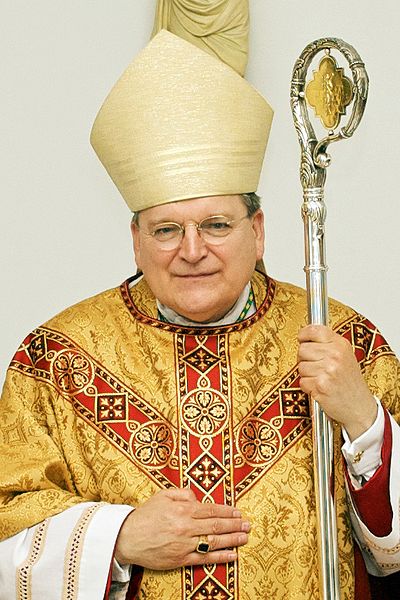
Oh – one last thing – maybe I am pulling for one candidate. Currently listed as 80 to 1 odds – I always did like an underdog. Cardinal Raymond Leo Burke, famous for refusing to give John Kerry communion, because of Kerry’s stance on abortion. Burke comes from Richland Center, WI, and is my step-grandfather’s nephew. We saw each other only once, at Grandpa Theron’s funeral, when he was still bishop of LaCrosse.  But – wouldn’t it be cool to be related to the Pope??
Raymond Leo Burke
Raymond Leo Burke

Nearly any discussion on holistic ministry, or the balance between proclamation and social action, induces strong emotions. Most of us feel strongly about one or the other, and we usually struggle to integrate proclamation of the gospel with demonstration of gospel love. Those who focus on demonstrating God’s love by meeting the physical needs of suffering humanity are frequently accused of watering down the gospel, or even ignoring man’s greatest need – that of reconciliation with his Creator. Those who focus primarily on proclamation of the truth of Jesus as the only way are seen as lacking compassion, and even ignoring man’s pressing needs that keep him from understanding the love of God.

But the Bible clearly tells us we need to do both – or rather, do it all. Proclaim God’s love and truth, do all we can for people to have access to what God says about himself and them, be incarnational representatives of the Kingdom of God anywhere and everywhere, and continually assist with the unbelievably overwhelming needs of a world that groans for its Creator, Savior and Lord. We do the gospel, the love of God toward us, and His love through us a disservice when we ignore any part of our mission.

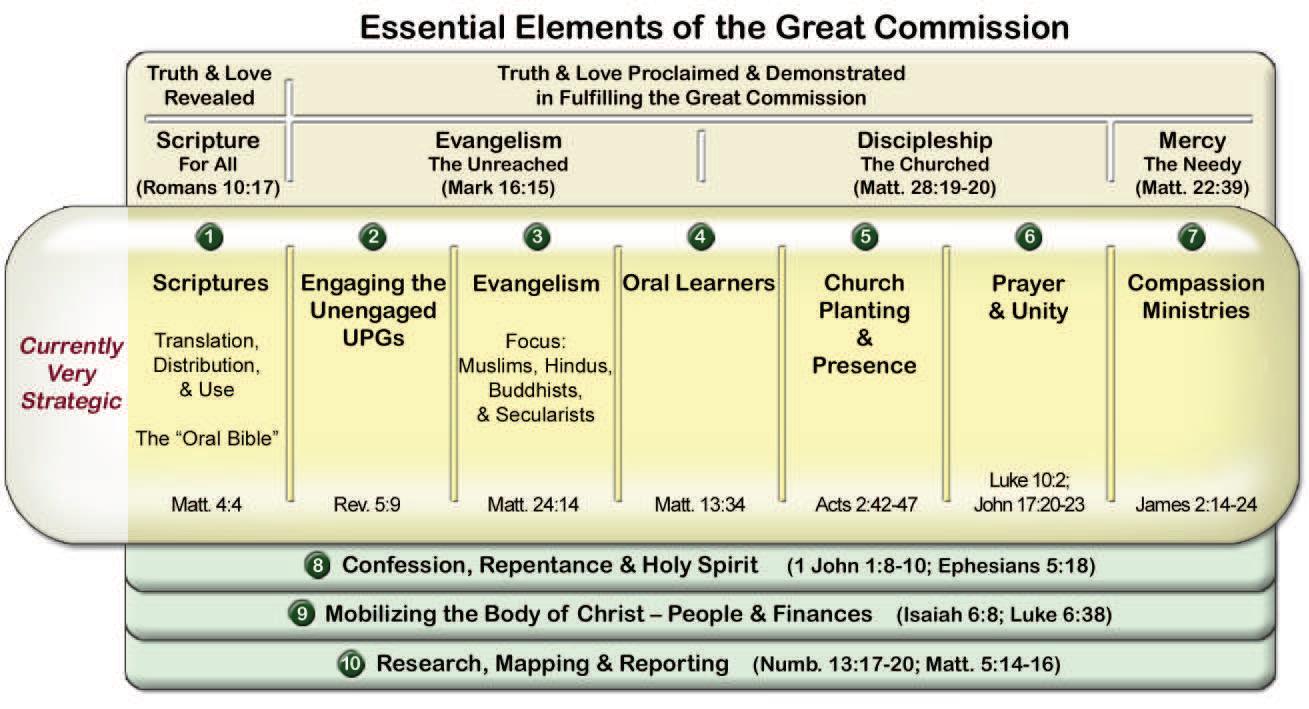
One of the best diagrams I have ever seen of the wholeness of our mission comes from a Cape Town 2010 Advance Paper written by Paul Eshleman on behalf of a Lausanne strategy working group as an overview of the topic “Priorities in World Evangelization.” I’ve included a graphic that Dr. Eshleman uses to illustrate our priorities:

whole gospel

I see numbers 1-7, in the main body of the graphic, as being of equal priority. 8-10 are necessary as well, because they enable us to do tasks 1-7.

The Lausanne Covenant summarized our task as “The whole church taking the whole gospel to the whole world,” and the 2010 Cape Town Commitment, in the Call to Action, listed a number of priorities for the church in working out that covenant. Every aspect of our task is dealt with, and both proclamation – especially of truth – and social action are strongly encouraged. And I would wholeheartedly sign my name to the Commitment. The following elements are listed: proclaiming the truth of Christ; building the peace of Christ; living the love of Christ; discerning the will of Christ; calling the church of Christ back to humility, simplicity and integrity; and partnering in the body of Christ for unity in mission. Every one of these is a necessary element of our mission. No part should be ignored.

So, there is a necessity for deed, for social action, for living the love of Christ and building the peace of Christ. Helping the helpless is a noble call, a necessary duty, and a winsome demonstration of God’s love toward His Creation. And, when we help, we don’t help just to “share the gospel.” We don’t build wells only for those who are “open to the gospel.” We help to meet the physical needs of Hindus, Christians, Muslims and atheists alike – because God loves them. No one has to “accept Christ” in order to receive our help.

I say this strongly to myself, because I still believe in the priority of proclamation. I still believe that the greatest need of mankind is the need of reconciliation with his God. But, in my own heart and ministry, there will always be a tendency to focus on proclamation and forget compassion – it’s just how I’m wired. All the more, I have to continually preach to myself – help others!! And don’t expect anything from it.

Having said that – funny things happen when you help people. First of all, their life begins to get easier – if for no other reason than that they see there is someone who cares about them. Second – your life is touched and changed. God’s love grows in you as you exercise it. Third, a trust relationship begins that does usually lead to opportunities to talk about other, significant needs – like reconciliation with God. And reconciliation with God leads to reconciliation with others, and what was probably a downward spiral in the life of the person helped begins to spiral upward instead. And that is so much fun to be a part of!

You can find the entire text of Dr. Eshleman’s paper here: http://conversation.lausanne.org/uploads/resources/files/10522/Eshleman.pdf


Fun facts about Polish hospitals

Posted: February 26, 2013 in Lublin, Poland
Tags: ,

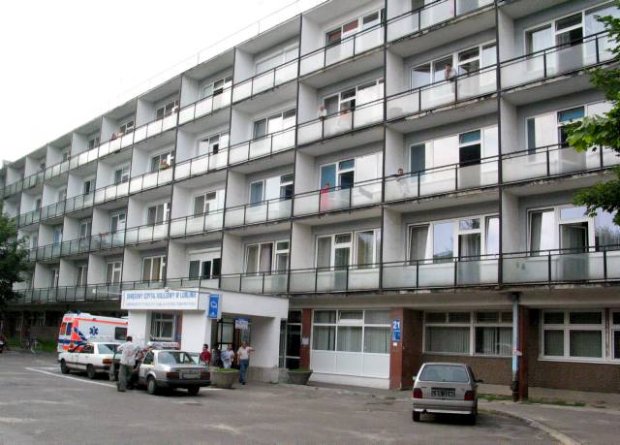
23 07 2003 LUBLIN SZPITAL KOLEJOWYFOT IWONA BURDZANOWSKA / AGENCJA GAZETA

1. Bring your own toilet paper.

2. Bring your own fruit.

3. Bring your own water – you’ll get lots of tea, but water is a little less likely.

4. Bring your own towel, washcloth, toothbrush, etc. – you might be able to buy a few things, if the hospital has a little store, but don’t count on it.

5. Bring your own knife, fork, spoon, cup, and dish soap to wash them! (Thanks, Christie M., for the reminder)

6. Look forward to getting to know a few other people really, really well. Private rooms are uncommon.

7. Bring your medical records with you, and keep them with you.

8. Bring some money. Thankfully, bribing the doctors and nurses is less common than it used to be – but you’ll need to it to buy all the things you forgot to bring. Like toilet paper. And water.

9. Hope you enjoy pajamas and a robe (and slippers). That’s the required hospital fashion.

10. Don’t expect to get a lot of information. Poland is a high-context culture, you are expected to just “know” these things.

11. If you are having surgery, you are expected to provide your own blood for a possible transfusion. Or have someone donate in your place.

http://poznan.gazeta.pl/poznan/1,36001,11956036,Pacjent_przed_operacja_ma_zalatwic_krew__Szpitale_.html

12. Assuming you pay privately – which you do if you aren’t part of the national health service – expect to pay about 10% of what you would in the United States (this is the best fact of all!!) If you are in the EU health care system – most standard procedures are free.

Preaching in a Polish village

Yesterday, I visited Rudka, a village on the Ukrainian border, to preach in the Baptist church. I’ve preached here many times, but I thought I would describe the visit this time – to let you experience it along with me.

Rudka is about 80km from Lublin, and now, with some newly built highways, it takes about 80 min to drive. The drive is through mostly flat farmland, with long hills that provide the opportunity to look far across the countryside. As you pass Chelm, and near Rudka, the terrain becomes more swampy and forested. Rudka is right on the Bug River, the eastern border of Poland.

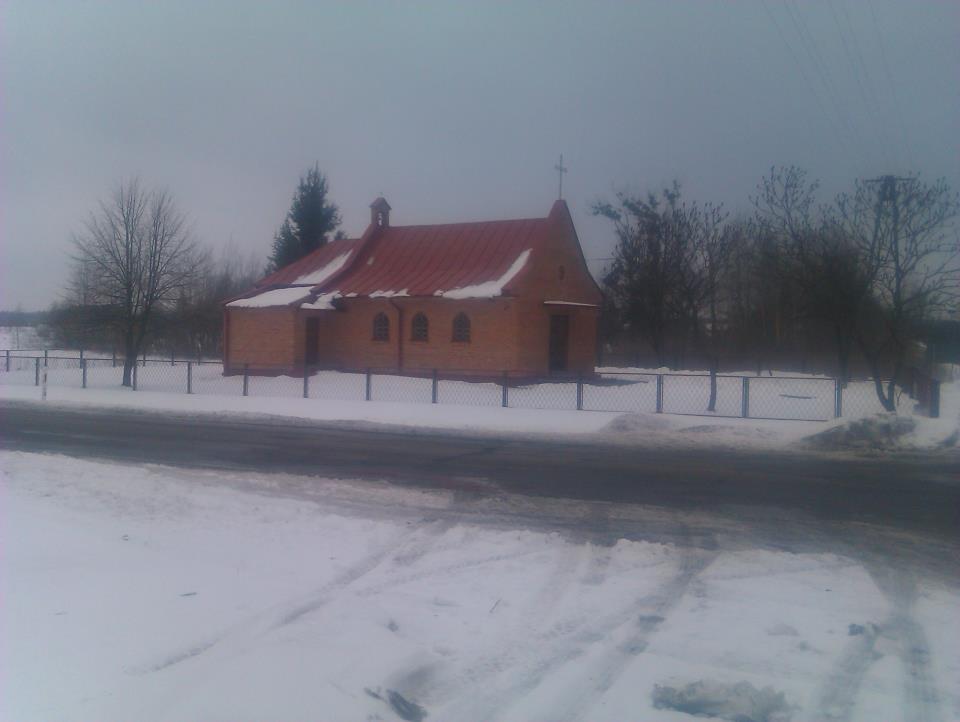
Catholic Church in Rudka

Catholic Church in Rudka


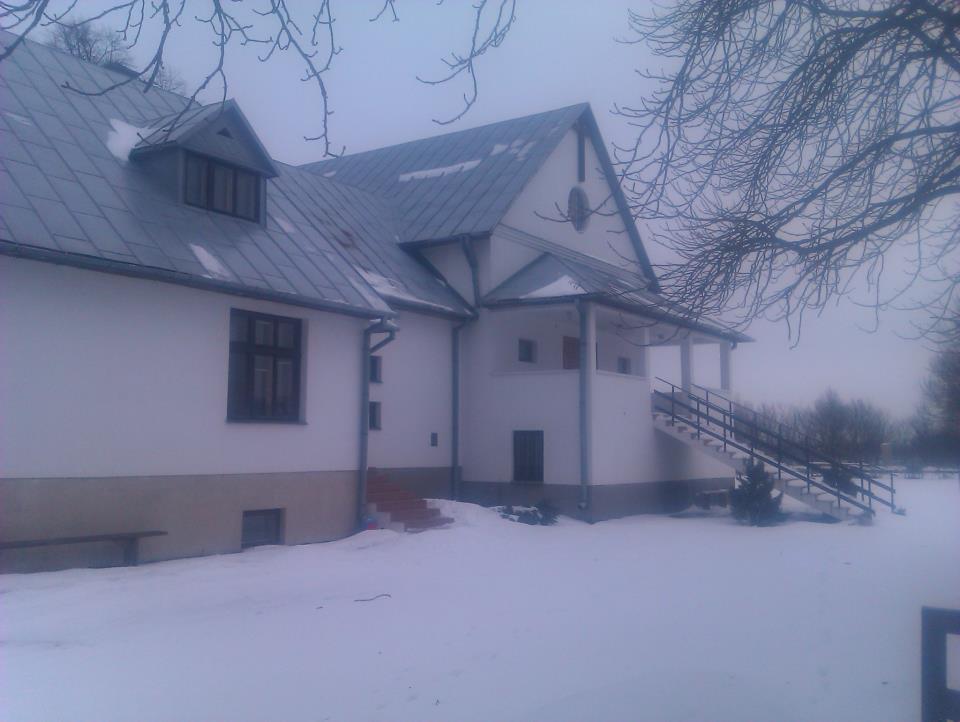
Baptist Church in Rudka

Baptist Church in Rudka


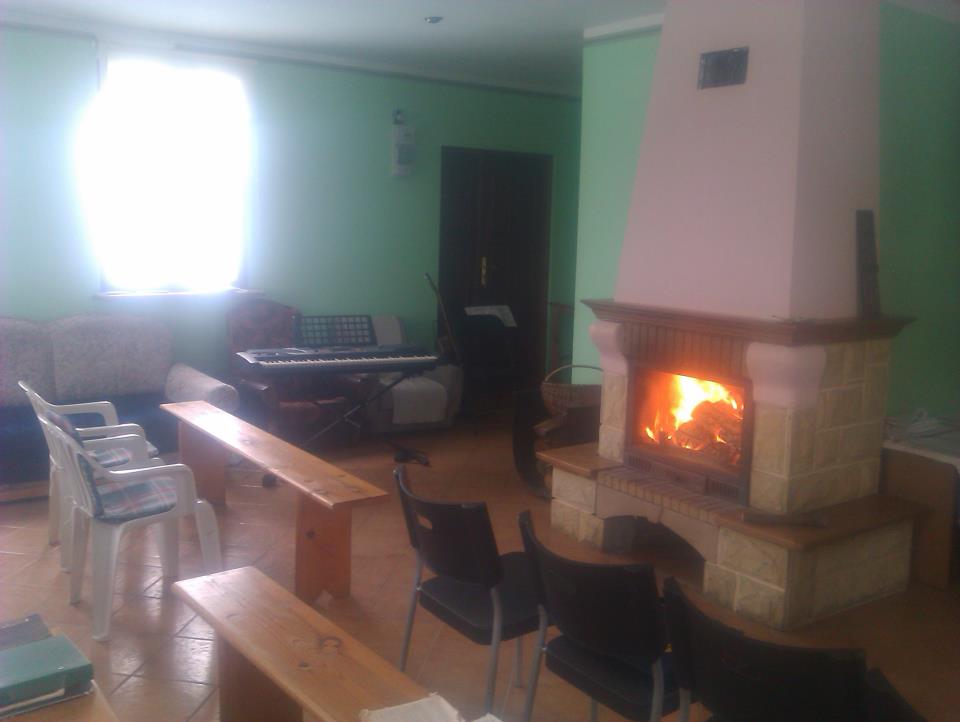
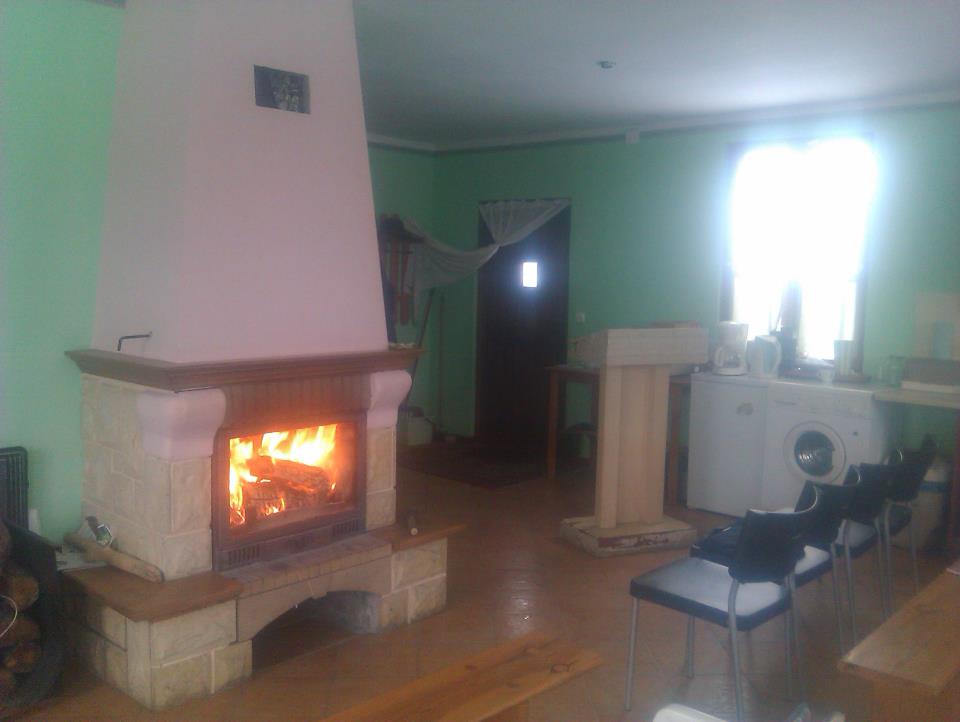
Rudka meeting room

Rudka meeting room

meeting room in Rudka

Rudka meeting room

The route from Lublin brings you right past the cute little brick Catholic church, and straight toward the Baptist church. The Baptist church was built in the 1980s, with money from America, and is quite a bit larger than the Catholic church – probably the only place in the country where this is true. During the winter, though, the Baptists meet in an old wooden schoolhouse next to the church. They moved this building onto the property about 10 years ago, and remodeled it into a small home. About 1/3 of the building is comprised of the meeting room, with a fireplace. Since the church only has about 25 members, the room is perfect for winter services. The auditorium in the church building isn’t heated, so until they were able to remodel the school, services in the winter were pretty miserable! Rudka struggles with a frequent problem in Poland for evangelical churches – the large building that Western money helped build has proven very difficult and expensive for the small church to maintain.

I arrived about 9:30 for the 10:00 am service. In our church in Lublin (a fairly large city), the music group is practicing by 9:00, and people start arriving for church by 9:30, mostly because of city bus schedules. In Rudka, however, the first person came at 9:50, an old lady who had walked about 2km. However, by a couple minutes past 10, everyone who was going to come had done so, and the service started. We sang choruses, the leader, Jacek, read a passage, and, as is traditional in our smaller Baptist churches in Poland, there was a time of prayer –when anyone and everyone who wants to prays, and a time for testimonies – again, open to anyone. I preached, and closed with another prayer time. We sang a couple more songs, announcements and offering (some things are completely cross-cultural!!), and wrapped up the service.

The congregation was a mix of old and young, although there were less than 20 people at the service. Most of the younger people had gone to Chelm to hear a former pastor speak.

Afterwards, we had lunch together. A few people had brought food to share. Not everyone stayed, but most did, and another couple came, after attending a service in Chelm, just to share lunch with us. Informal and relaxed, but a couple people did share testimonies again about God working in their lives. We ate and fellowship for another couple of hours, and I headed home.

The group in Rudka is definitely less time-conscious than we are in Lublin, or than most churches in America. This is probably a common difference between urban and rural settings. Also, although they always say how much they appreciate my coming, and my preaching, I think the high point of the day is lunch together afterwards. And I wholeheartedly agree, and I think it should be that way!! J It’s a small group, and they have squabbles just like any other group, but that family time together is at least as important as the sermon.

I would encourage you to remember Rudka in your prayers. Pray for Jacek and Bozena, Darek, Mariusz, and other leaders. Pray that they would be faithful in their witness – it’s harder in the village than it is in a city, where anonymity is the rule. Pray that they would be able to keep their relationships strong, even during times of conflict.

From the Pew study I referenced in part 1, we get an exciting picture of a group of young people that may better understand what really matters than their elders did. Family, helping others, openness to others – these are more valued by Millenials. At the same time, church has lost their trust – although faith is still important.

In order to engage Millenials in missions, a few key words come to mind. Family, authenticity, education and compassion are important. Being techno-savvy, providing means to connect in multiple media, and enabling them to fulfill their extended family responsibilities will be things that they will probably look for in an organization.

I think making an appeal based on the radical nature of the missionary lifestyle will be attractive for many Millenials. They’ve been there, done that, got the t-shirt – but they haven’t incarnated Jesus Christ among the Uzbeks, yet. Also, the more creative opportunities we can offer, the better.

Continuing a focus on the spiritual aspect of our mission is vital, as well. We probably don’t have to worry anymore about a denominational affiliation being important, or even about the old discussion of church/para-church. Millenials don’t seem to care. But we really need to continue to promote and model an authentic, transparent walk with Christ – in all levels of our organization. This will both attract and keep people who join us.

Millenials say that the older generations have a better work ethic and more developed moral values. I think Millenials expect us to help them develop those aspects better. We ought not be afraid to mentor them in those areas. In fact, any way that we can continue to integrate the Builders and Boomers, even after their retirement in organizational “family” could be very valuable for all of us. And I believe Millenials would welcome the input of those who are now old enough to be their grandparents.

Of course, everything we can do to use the web, facebook, twitter, etc. will be helpful – for as long as those media are still in use. Actually, more than helpful – irreplaceable. Our use of these media can be simple – but it has to be done well. However, I think personal relationship and trust building is still vital in our recruiting – it isn’t replaced by technology, but can be enhanced by technology.

Anything we can do to become more diverse will be welcome to Millenials, as well. With a globalizing world, and the Millenials’ openness to other cultures, if our agencies aren’t much more colorful in 20 years, they will probably be in danger of dying. Opportunities to be involved in compassion ministry will also be more attractive than many other ministries. Anything we can do to encourage and facilitate continuing education is already a necessity, considering that over half the Millenials are already at or beyond university age.

This Baby Buster sees the Millenials as just as great a potential for change as the Boomers have been – and to be honest, with more positives than the Boomers gave us. But we can’t just “buy” them into our own agenda and vision. Sure, we can and should influence them, but they will want to create their own thing. Can we let them? I hope so.

As a GenXer (born September 1969), when anyone discusses the Millennial Generation, I find it a little shocking to realize that they are talking about my kids – or two of them at least, born in 1993 and 1995. My oldest son entered college last year, so I glanced at Beloit College’s annual “Mindset List” (http://www.beloit.edu/mindset/2015/ ) to see some of the things that identify his peers:

This year’s entering college class of 2015 was born just as the Internet took everyone onto the information highway and as Amazon began its relentless flow of books and everything else into their lives.  Members of this year’s freshman class, most of them born in 1993, are the first generation to grow up taking the word “online” for granted and for whom crossing the digital divide has redefined research, original sources and access to information, changing the central experiences and methods in their lives. They have come of age as women assumed command of U.S. Navy ships, altar girls served routinely at Catholic Mass, and when everything from parents analyzing childhood maladies to their breaking up with boyfriends and girlfriends, sometimes quite publicly, have been accomplished on the Internet

A few other selected factoids from the list help me understand Clint’s generation a little better:

  1. Their first president was William Jefferson Clinton (no, my son Clinton is not named after him – but most people assume he was!)
  2. The only significant labor disputes in their lifetimes have been in major league sports.
  3. There have nearly always been at least two women on the Supreme Court, and women have always commanded U.S. Navy ships.
  4. O.J. Simpson has always been looking for the killers of Nicole Simpson and Ronald Goldman.
  5. Women have never been too old to have children.
  6. The Communist Party has never been the official political party in Russia.
  7. “Yadda, yadda, yadda” has always come in handy to make long stories short.
  8. Dial-up is soooooooooo last century!
  9. Women have always been kissing women on television.
  10. Sears has never sold anything out of a Big Book that could also serve as a doorstop.
  11. They’ve always wanted to be like Shaq or Kobe: Michael Who?
  12. They won’t go near a retailer that lacks a website.
  13. When they were 3, their parents may have battled other parents in toy stores to buy them a Tickle Me Elmo while they lasted. (Yep!! I remember that!)
  14. “PC” has come to mean Personal Computer, not Political Correctness.


The Pew Social Trends article on Millenials:  A Portrait of Generation Next – Confident.Connected. Open to Change, lists a number of ways in which Millenials differ from previous generation – and many of those ways can inspire a real optimism that this younger generation may be an improvement over the last two. http://pewsocialtrends.org/files/2010/10/millennials-confident-connected-open-to-change.pdf.

As the title says, they are more confident than the previous generations, more connected – both technologically and to one another, and much more open to change. They are more self-expressive, far more ethnically and racially diverse and more open to other cultures and immigrants.  Millenials are on track to become the most well-educated generation in American history. They are more upbeat than their elders about their own economic futures. They are history’s first “always connected” generation. Steeped in digital technology and social media, they treat their multi-tasking hand-held gadgets almost like a body part – for better and worse.

They say they have enough or will meet their financial goals – although I think those goals are less demanding. They respect their elders. A majority say that the older generation is superior to the younger generation when it comes to moral values and work ethic. Also, more than six-in-ten say that families have a responsibility to have an elderly parent come live with them if that parent wants to. By contrast, fewer than four-in-ten adults ages 60 and older agree that this is a family responsibility.

They are the least overtly religious American generation in modern times. One-in-four are unaffiliated with any religion, far more than the share of older adults when they were ages 18 to 29. Yet not belonging does not necessarily mean not believing. Millennials pray about as often as their elders did in their own youth. Being a good parent is significantly more important for Millenials than it was for Gen Xers at the same point in their lives. Helping others – slightly more important. Having free time for leisure – slightly less important. They are less politically engaged, but slightly more likely than GenXers and Boomers to volunteer, and significantly more likely than Builders.

In my next post, I’ll share some of my thoughts on how these characteristics affect mission agencies, as they seek to engage Millenials.

My dad pastored a couple of churches, including one that he planted, before leaving the ministry to start his own lumber business. I still haven’t plumbed the full extent of his impact on my life and ministry, since sometimes I don’t notice his influence until I am in the midst of a ministry conflict or crisis, and see myself doing what I saw him do. He served faithfully and humbly, ready to give anyone anything. For years, he had a personalized license plate on his car: “OTHERS”. That word summed up his view on ministry and leadership.

Of course, when we think about leading a team, church or organization, a key task of the leader is helping to develop a common vision, strategizing to reach the goals that that vision mandates, building unity around the common dream, and motivating his teammates, especially when adversity arises and their self-motivation begins to wane. Dynamic leadership can then be understood as “understanding the direction to be taken, and inspiring others to go in the same direction.”  Or, as Robert Clinton defines it: “Leadership is a dynamic process in which a man or woman with God-given capacity influences God’s people toward His purposes for that group” (The Making of a Leader, 14).

Some basic principles serve as a starting point, then, for a biblical leader:

  • People are made in the image of God and therefore have intrinsic worth (Ge. 1:27-28)
  • People are motivated to perform with excellence in recognition that everything is to be done to the glory of God (Col. 3:23)
  • People will not grow and develop unless they are trusted and given freedom both to succeed and fail
  • A leader is appointed by God and assumes authority from Him (Ro. 13:1)
  • Successful leaders view others as friends, not as subordinates, and interact with them in a spirit of openness and humility (John 15:15)

A biblical leader-servant exemplifies the following characteristics:

  • Maintains and builds unity (Eph. 4:3). Avoids needless arguments about ownership, credit or territory.
  • Is not threatened by others’ strengths and accomplishments. Recognizes the value of these strengths and uses them to help achieve the goals of the group.
  • Builds others up. Encourages and lifts up others in every possible way. Celebrates the victories of others, no matter how small.
  • Is pro-active to move issues ahead, while maintaining meekness and consideration of others.
  • Speaks well of others at all times.
  • Seeks to build a broad base of leaders to lead with her.
  • Recognizes and uses authority appropriately.
  • Does not draw his meaning, worth or reputation from the position he holds.
  • Does not make decisions based on his progress, advancement, comfort, increase of authority or position at the expense of those he serves.
  • Is committed to his followers’ progress, ministries and their increase.
  • Develops other servant leaders.

(Both the list of principles and the characteristics are from Omega Course: Practical Church Planter Training, Manual 4, 77-78)

The truly humble leader realizes that he isn’t better or even more accomplished than those he leads. And he doesn’t care. He lives to serve them, and is truly happiest when THEY succeed.

The Intersection of Humility and Dynamic Leadership I

The Intersection of Humility and Dynamic Leadership III

Humility, at its most basic biblical definition, means knowing who you are in Christ. Our identity in Christ is the only sufficient tool that helps bring us freedom from arrogance and pride. We understand that in ourselves, we don’t measure up, will never measure up, but in Christ, all things are possible, including submission to God and others. Humility is most often demonstrated through sacrificial love of other people.

Radical submission to Christ can be practiced by doing whatever we know Christ wants us to do –whatever the anticipated consequences. We put His desires first, and in so doing, our own desires are, over time, transformed to be like His.

Dynamic leadership can be understood through three words: vision, influence and motivation. A dynamic Christian leader casts a big dream vision and helps others discover the big dream vision God has for their lives. She influences and motivates people to move forward in their walk with Christ and personal growth.

When we look at all three concepts together, we see an upside-down model of Godly leadership. Instead of a leader who uses and manipulates people to meet his own agenda, we see a leader who lives to serve others, and meet their God-given agenda. Of course, this is the opposite of what we frequently expect from our bosses and CEO’s, and it is only possible for the leader who understands his identity in Christ and realizes the incredible power of submission and service.

Philippians 2 provides an excellent picture of the leader-servant, and Paul bases the picture on the example of Christ. Do nothing out of selfish ambition or vain conceit, but in humility consider others better than yourselves. . .Your attitude should be the same as that of Christ Jesus: Who, being in very nature God, did not consider equality with God something to be grasped, but made himself nothing, taking the very nature of a servant, being made in human likeness. And being found in appearance as a man, he humbled himself and became obedient to death—even death on a cross! (Phil. 2:3,5-8).

If we look more closely at Jesus’ teaching and example, we can see that Jesus’ ministry was founded on helping others achieve success (John 15:15-16). If our Creator, Lord and King can humble Himself to be one of us, call us “friend,” die for us, and take on the nature of a servant – I have a hard time coming up with reasons why I shouldn’t have a similar attitude.

Paul also taught and practiced a similar form of leadership. In 1 Thessalonians 2, he emphasizes how he was not a burden to the Thessalonians, but instead was gentle, like a mother caring for her children. In Galatians, he encourages us to “bear one another’s burdens.” And of course, we already saw in Philippians how Paul encouraged us, on the basis of Christ’s example, to have a humble, servant attitude.

In 1 Peter 5, the apostle Peter also highlights the need for elders to be “eager to serve; not lording it over those entrusted to them.” When Peter uses that last phrase, he is harkening back to Jesus’ teaching in Matthew 20:25-28, where Jesus says that the one who wants to be great must first be a servant – just as Jesus himself came to serve, not to be served.

The Intersection of Humility and Dynamic Leadership II

The Intersection of Humility and Dynamic Leadership III

Including this challenge undoubtedly reflects my heart as a church-planter. My theological education colleagues would probably put “orality” here, and a more strategic thinker may put “identity and vision” in this fifth spot (or first!) But the growing interest in church planting movements, the rise of the “emerging” church, the explosion of house churches, and the death of denominations are all reshaping the landscape of the global church. Within my own agency, we may need to rethink our definitions of church – and then we will face another balancing act between that definition, and the definitions that most of our supporters cling to.

All of these factors affect most mission agencies, even those traditionally associated with a denomination. Our understanding of church, even in the West, is being shaped by the non-West – and that’s a good thing. However, there are myriad different understandings of what it means to be a church. How do we define church within our global mission? How does the majority of our supporters define church? How do our national partners define church? How do we promote rapid growth of church planting movements (assuming we want to do so), while still effectively training church leaders?

Neither persecution nor terror is a new challenge for the church. After all, 1800 years ago, Tertullian claimed that the blood of the martyrs is seed of the church. And it still is. David Garrison, in his book Church Planting Movements, identified the high cost for following Christ – as seen in persecution and martyrdom – as a factor present in most church planting movements (224). Persecution is still a fact of life for many (most?) Christians around the world, and will remain so until Christ returns.
The war on terror isn’t new, either. Ask an Israeli, a Londoner who lived during the height of the IRA bombings, or a current resident of northern Mexico. But the fact that the majority of mission agencies are based in the “Great Satan,” in addition to the prejudice that many Americans have toward Islamic peoples and countries, produces a tension that directly affects the work of those same agencies. Even if the missionary is not serving in a Muslim country, the threat of a terrorist act remains, and the prejudice she encounters when she returns to the United States can sometimes look like a xenophobic reaction against all non-Westerners and immigrants.
The tension is heightened when we understand our citizenship is not in this world. This concept is easier for those who live and work cross-culturally – to such a degree that we are sometimes seen as non-patriotic by our fellow Americans. It’s also made tougher when we begin to see our call as one that consumes our life, is worthy of martyrdom, and challenges us to sacrifice and suffering. When that happens, it’s as if we are speaking a foreign language for many of our fellow Christians in the West.
But, that’s the tension we missionaries face, and our mission agencies as well. The agencies are in the position of encouraging people to serve, invest their lives, and go boldly. But they also are faced with the responsibility of caring for those same people, evacuating and counseling them when all hell breaks loose, and reassuring their friends and family members that it will be ok.
We who share kingdom values recognize the inestimable worth of the martyr. Yet – I can’t honestly confess that I want to be one, and I’m hoping that my international ministry director would rather I didn’t become one as well. However . . . if that’s what it takes . . . we long to be able to say, “Not my will, but yours, Lord.”