


I grew up in a conservative, Baptist pastor’s family, where it was assumed that once you reached a certain age – 8 or 9 – and had prayed a prayer of salvation, you would get baptized. My wife had a similar background, and we were baptized as children. We both attended Baptist colleges, and started ministry in Baptist churches, where many ideas related to baptism were simply taken for granted – immersion, after a profession of salvation, non-salvific in itself.
For the past fourteen years we have been ministering in Poland, 12 of those years in a Baptist church. Although the beliefs in the Baptist church about baptism remain the same, none of them are taken for granted. Poland is still 90% or so Catholic, and most people in our church have some kind of a Catholic background. In other words, most of them were baptized (sprinkled) as infants, and taught that that baptism saved them. So, deciding to get baptized (or re-baptized) as an adult is a truly life-changing decision. To be honest, I don’t think it usually is that life-changing in the American evangelical churches I’m familiar with. I would have to admit that it wasn’t for me – in fact, I barely remember my baptism.
Thankfully, being baptized doesn’t have quite the cost (death, imprisonment) that it does in many countries. However, it still can mean ostracism by family and friends, because the person has “left the faith.” This only adds to the weight of the decision to get baptized. One of the implications for me in ministry is that I don’t try to rush anyone into baptism. Some pastors here do. I don’t feel that I can in good conscience manipulate someone into a decision that may have significant consequences for them. Of course, I teach about baptism, encourage people to get baptized, and am over-joyed when they choose to do so.
One of the factors for me is the belief that baptism doesn’t save. Of course, not every evangelical would agree – that’s fine. But I want to make sure, if possible, that the candidate is not simply exchanging an evangelical salvation by works for their Catholic one.
It’s also interesting that here in Poland, the key point that people emphasize is baptism as an adult – or at least after a certain age. This seems more important than immersion, more important even than the discussion of the saving grace of baptism. In fact, there are people in our Baptist church that believe that baptism – at least in part – saves them (yeah, I know – not a Baptist doctrine – welcome to the reality of church.) But the idea of baptizing children is unthinkable. And they struggle every time an American missionary family asks if their children can be baptized!
Yesterday, I had the amazing privilege of baptizing four people. All four talked about how they wanted their baptism to be a public show of their “belonging to Christ.” We heard four completely different stories of God drawing someone to Himself. M. was connected to our church since childhood, but didn’t come to Christ until his unbelieving, alcoholic father passed away. H. was also a part of our youth group, and prayed to accept Christ at an English camp.
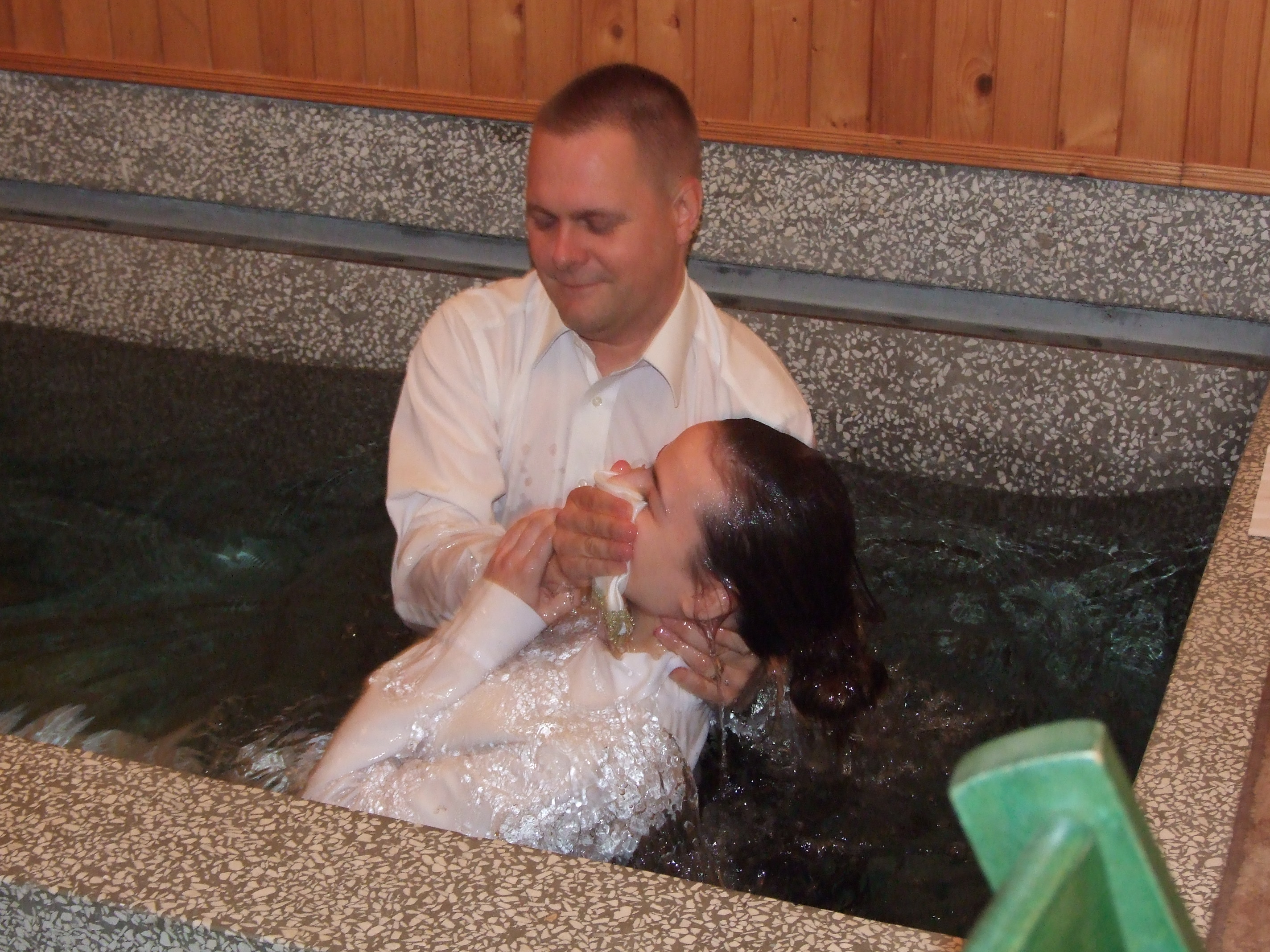
Baptism 2011
K. experienced every kind of violence possible as a child. She tried drugs, alcohol and sex to fill the God-void in her life. Eventually, she tried to kill herself. Three times. But then she heard about the love and grace of God – and surrendered to Him.
A. grew up in a Catholic family, with parents – especially her dad – who read the Bible and prayed regularly. However, as an adult she began to understand that she was trying to do everything on her own to gain favor with God. She asked God to change her stone heart into a heart of flesh. And God did!
Thrilling stories of God working – and what a thrill to be able to help them along their journey. Days like yesterday make it fun to be a pastor!


 Missions in Europe