Near the end of 2011, I wrote about our African friend who had escaped from an unbelievably intolerable existence. That story is here. In short, our friend, Susie (not her real name, of course), had married a Polish mercenary in Liberia. This man, with a history as a wife beater, brought Susie back to Poland, where she lived   in his unfinished home, frequently with no heat or electricity, and with a growing pile of garbage in the garage, since he never paid any bills. He continued to beat her and do other awful things to her, but a number of factors made it difficult for her to leave.

However, as you can read in the linked story, she was able to leave, and find refuge in our church building. We organized legal assistance for her, a Nigerian friend helped her get her immigration status squared away (her husband had lied to the authorities in her name), and other friends have helped her figure out how to make it on her own. Although life is still difficult for her and her daughter, she feels free, finally, and no longer must live in fear.

Which is not to say she isn’t still afraid, sometimes. As with most victims of domestic violence, the simple thought of her husband can bring feelings of dread, and panic. However, we can see growth here, too. Thank God for his healing power.

When I first wrote about Susie, her husband had been in jail for 3 months, but then had been released. In Poland, a person can be sent to jail for up to 3 months, while an investigation is conducted, simply on the request of a prosecuting attorney. Now, my American sensibilities think this is unfair – but it didn’t stop us from being very grateful for it! However, after the 3 months were up, he showed up right away at our church building and began harassing Susie again.

He would follow her as she walked their daughter to school, cursing and insulting her. He regularly tried to take the daughter out of school, and once succeeded. Thankfully, he brought her back after a couple of days, but he tried everything he could do assert some sort of power over Susie. Once, he pushed her down in the street. When we went to the police to make a report, the officer in charge told me that such things are  allowed in Poland. Evidently, you can hit someone once, without being charged. (No, I didn’t ask the officer to step outside – pretty sure that rule doesn’t apply to hitting a police officer . . .)

One time, he came to the church, saw Susie outside, ran up and starting hitting and choking her. Thankfully, our building caretaker saw what was happening and called the police. The police made the daughter (who was 7), tell what her dad had done to her mom, but didn’t arrest the man. These kinds of things continued for about a year, until the prosecuting attorney did some follow-up investigation, talked to us again, as well as the director of the school, and had him put back in prison.

Along the way, we have seen God intervene over and over. Both times that he was imprisoned, it came as a surprise – but a welcome one. We have seen how a number of Poles have sacrificed to help her – even risking retaliation from her husband. God has worked through all of these people. And I get a kick out of telling them so, since a few of the most helpful don’t really want all that much to do with God! But God is using them, too!

At the same time, though, we have seen some of the uglier parts of the Polish system. Some of the police have treated Susie with disdain, partly because she is black, and a woman, but mostly because she can’t speak Polish. During the first criminal hearing, a translator for Susie was not supplied, and she ended up agreeing to something that would have hurt her case. However, when another friend of ours informed a journalist, and organized some observers from the Helsinki Foundation for Human Rights – somehow all the records from that first hearing had been deleted from the computer. . . This was good for Susie, but certainly raised some questions in our minds!

Today, Kaye and I were supposed to be witnesses in the next criminal hearing. Our testimony is pretty significant, since we were the primary witnesses to the beating that preceded the police intervention that finally began the criminal process – after a number of other beatings that the police responded to, but never initiated an investigation. And of course, we have been witnesses to the husband’s continued harassment, stalking, and violence.

But – Susie’s husband is in a mental institution, under observation. So, the case has been delayed, again. However, no one from the court told us. No – the court secretary phoned a Polish witness, and asked her to tell us, and Susie. Oh, well.

Please keep praying for Susie, and for us – especially Kaye, and for all the people helping Susie – her lawyer, friends from church, a kind lady from Family Services, a nurse who has helped immensely, and of course for Susie’s daughter.

In my town, Lublin, Poland, nearly all the places of worship are in the Christian tradition. Although there are 350,000 people in Lublin, non-Poles and non-Christians are a tiny minority. There is one Islamic Center, and four “dharmic” religion centers, but no mosque or Eastern temple. The only choice left is a Jewish synagogue. In 1939, Lublin had 42,000 Jews, more than 100 Jewish synagogues, a Jewish hospital and orphanage, and one of the most important Yeshivas. Lublin was a cultural and political capital for Eastern European Jews. However, the Nazi occupation saw most Lublin Jews exterminated, and all but one synagogue destroyed. That one synagogue ceased to function in the 1980’s, because less than 10 Jewish males could be found in the area. It remained possible to visit it as a tourist, but services were very rare.

Lublinyeshiva

Lublin Yeshiva

However, in 2005, the Chachmei Lublin Yeshiva was re-opened, and a synagogue was built inside, finished in 2007. (More about the synagogue here: Virtual Shtetl)I visited this synagogue, but I think it is impossible to simply visit this prayer room without being mindful of the Jewish history of Lublin, and the incredible suffering involved. The Yeshiva and synagogue are in a building built in the early 20th century that was “appropriated” by the Medical College of Lublin after World War II, and was not returned to the Jews until the beginning of this century.

Next to the synagogue are 3 rooms that show the history of the yeshiva and Jews in Lublin, with plans for a Museum of Hasidism. Although there are no pictures or other mementos of Jewish suffering in the main room of the synagogue itself, those rooms are only a few steps away.

Majdanek Concentration Camp

Majdanek Concentration Camp

In addition, just two blocks away is the “New” Jewish cemetery, where thousands of tombstones and graves were bulldozed, crushed into gravel, and used to pave the entry road to the Nazi death camp of Majdanek. So, a Jew could march across the tombstones, and perhaps bones, of his ancestors as he made his way to the gas chamber.

A short video tour of the synagogue can be found here: Virtual Shtetl video. This was my second visit to the synagogue, and this time I realized how similar the room was to a small Christian chapel. My first visit, I was struck by the differences, but this time the similarities seemed more striking. Of course, this is a new synagogue, so everything is freshly painted, the oak floors look brand new, and the bookshelves on the side of the room are still nearly empty.

There are 7 wooden benches on each side, facing the front. Each bench has a small book shelf and reading shelf in front of it. There are also fabric-covered wood strips near the floor, in front of each bench, where a kneeler would be in some Christian churches. These strips are evidently foot rests, however. There are four Corinthian style pillars on each side, painted green, supporting a balcony. The synagogue has a side entrance, and there were no special requirements to enter, at least for a tourist like myself.

Near the front, there were 2 center-facing benches on each side. I wondered who would sit here, but I noticed one picture from a special service in the synagogue that showed these benches turned to face the congregation, with what looked like VIPs in these front benches. There were also reading benches, with no seats against the front wall. These had indentations on the top front, the right size to hold writing utensils. There was another reading bench in the exact center of the room, facing the front, again with no seat.

Bema

Bema

There was a raised platform (called a Bema)  in the front center of the room , with another reading bench, no pen well. There was also a seating bench on this platform, far enough back from the reading bench that one would have to stand and approach it in order to read. The raised platform was surrounded by a cast iron railing to set it off from the rest of the room.

The front of the room is dominated by a tall raised platform with steps going up to a large locked wooden cabinet (the Ark). The cabinet is oak, decorated with the same Corinthian pillars, topped by 2 round pieces – that looked like overturned goblets. The top center of the cabinet has a wood and gold emblem of the 10 commandments, with a red and gold crown on top. There are lions or lambs facing the crowns on the tablets.

The walls have simple, normal Polish wall sconces with halogen bulbs, but one small menorah is on a shelf high on the front wall. A sign below the menorah said that it is a gift to the Jewish community in Lublin, in memory of 40,000 Lublin Jews killed in WW2. There is also a red electric bulb, made to look like an eternally burning flame on the front wall. There were also 2 Hebrew pages framed on each side of the large cabinet on the front wall. One thing seemed a little out of place – a small advertisement for a Polish flooring company attached to the base of the platform in the front of the room.

There was also a cast-iron container for donations – about one-fourth full, with almost all American dollar bills. (Only one Polish banknote) There was a reading or teaching room in the back, on the side. I found a number of books there, all in Hebrew and English (no Polish books). These books included some synagogue service manuals, and I looked through one of them. There were lots of responsive readings, similar to psalms, but with no Scripture references and I didn’t recognize any particular psalm. There was another room on the side, near the front, with pictures of rebuilding and reopening the yeshiva. There was also a sink in this room. I was not able to go up to the balcony

Women's Balcony

Women’s Balcony

(the section for women), but I could see some pages of text hanging on racks. There is also a large chandelier in the center of the room, with halogen bulbs, and floodlights around the top of the walls, pointed toward the high ceiling.

I was interested by the similarities with Christian churches – especially Catholic – and by the fact that there was almost no sign of being in Poland.

(All images from Wikipedia – I didn’t take any pictures)

McNeal, Reggie. A Work of Heart: Understanding How God Shapes Spiritual Leaders. San Francisco: Jossey-Bass. 2000. 224 pp.

Sometimes when and where you read a book means almost as much as what is in the book. Although the what in Work of Heart is pretty significant, the time and place in life when I read it made the book so much more valuable.

I was in the middle of my lowest point ever in ministry. Thinking strongly about packing up and “going home” back to America. But we had committed to being part of a Luis Palau evangelism outreach with several other churches in town, and as a part of that, we rented a couple of rooms in the center for a prayer vigil leading up to the campaign. We always had someone there, on duty, while people came and prayed. I needed something to read during my shift – so I picked up this book that my supervisor had given me a few months earlier. Am I glad I did!!

Reading this book, during a time like that – a low point, but also a spiritual retreat time – made the message much more meaningful, and allowed me to work through the questions the author includes for personal growth.

Here are my three best thoughts in the book:

1. The call we are discussing as a heart-shaping subplot in the leader’s story is the specialized and specific setting aside by God to some special lifelong task in His kingdom. . . The call is not invented, it is revealed. . . The point is this: it is tough enough to serve as a Christian leader with a call. Without it, the choice constitutes cruel and unusual punishment. (98-99)

I had struggled with understanding my call to Poland. I thought I was to come as a church-planter, but church-planting was so tough, and I, at least then, gave up after the first failure. Meanwhile, some elements of planting a church had no appeal for me. I think I had tried to invent a call – but based it more on a need, than on the way God had gifted me. This book was extremely helpful, beyond even the chapter on call, in helping me come to grips with this. It led to a crisis, where I almost left Poland, but we needed to go through that to come to an assurance of God’s leading.

2. Commonplace: Discovering that the ordinary is extra-ordinary. Habits: look for God, keep learning, say yes to God, stay grateful. (175-186)

Seeing God in the commonplace was probably what helped us survive the crisis we faced. When my ministry partner had an affair, when our church plant fizzled, when the dollar dropped by 50% – all at the same time – some of these reminders here helped us survive, and eventually see God’s leading.

3. The reflection questions from the conclusion. I worked through all of these, reflecting on most of them with my wife, and they really helped me see myself, my world, my heart and my call. (188-192)

            As I mentioned, working through these reflection questions was so helpful. I had never done anything like that, and I’m so glad I did. I’m very grateful to my supervisor for giving me this book, and I would have to say it was one of the most positive influences in my life – ever. I’ve shared ideas and questions from this book with Polish leaders that I mentor, as well.

Personal follow-up note: I had a class with Dr. McNeal at Columbia. During a break, I told him that this book had saved me in ministry. His response? Not just “thanks” or “praise God.” He said (without really knowing me) “you are worth it.” I got a lot out of the class, but to be honest, it’s those four words that I will remember the longest.

You can buy a revised version of Work of Heart here: Work of Heart at Amazon


Hugh Halter and Matt Smay, And: The Gathered and Scattered Church. Grand Rapids: Zondervan. 2010. 208 pp.

AND is an attempt to reconcile the attractional model of church with the missional model. The attractional models focuses on bringing people into the church, then discipling them. The missional model focuses on sending disciples into the world, where they can be incarnational, and make other disciples. Halter and Smay reconcile the two approaches with the idea that BOTH are necessary.

The three most insightful thoughts, in my opinion:

1. The missionary flow – engaging culture, forming community, structuring congregation. Even working backwards – starting from established structures, all three steps are necessary. (54)

I appreciated the inclusion of both directions – starting from scratch, as well as starting from structure. I also appreciated the terminology – that this is a missionary flow. The U.S. church could learn much by listening to missionaries who have a lot of experience engaging culture. We are forced, from the very beginning, to closely examine the cultures that we have voluntarily joined. The North American church of today is living in a culture that is nearly as foreign as is the eastern European culture that I live in. I can help my American friends by dropping hints about how to study and learn the culture they live in.

2. Engaging the culture – becoming good friends with people – takes 2 years. Everywhere. (57)

This was an eye-opening comment. We do expect it to happen much faster, and then wonder why it doesn’t. In our own ministry, we wondered why it took that long to get to know our neighbors, why it took so long to get invited to someone’s house. Even after the barrier of Polish was overcome, friendships didn’t develop quickly. So, the idea that a church can be planted, from scratch, in less than 2 years is a pretty crazy one. But, we continue to expect just that. In fact, when it doesn’t happen, we get more tempted to take shortcuts, such as inviting people from other churches to come join us (sheep-stealing), or we get very discouraged, and think that something is very wrong with us that no one wants to be our friend. It just takes time!

3. Modalic and sodalic are both necessary arms of the church – but in order to bring balance our intention must begin to lean toward the sodalic. (133)

Halter and Smay simplify their terms with this short explanation: “Modalic structures tend to focus on caring for those who are already inside the structure. Sodalities push toward those on the outside.” (129)

I think that I am more involved in the sodalic than the modalic, even though I am a pastor. However, I need to take an intense, honest look at ministry. It could be that, because of my learned church culture, I am mistaken, and spend more time than I realize caring for those in the structure, or even just caring for the structure! (God forbid!)

If you are in the U.S., and interested in the discussion about missional church, this is a book you should read. If you aren’t in the U.S., and are interested in the American discussion about missional church, this would be a good book to read. If you aren’t in the U.S., and aren’t particularly interested in this uniquely American dichotomy – I wouldn’t bother reading this book.

I believe the church in most of the world figured out a long time ago that both attractional and missional are vital.

However, if you are interested, you can buy the book here: AND at Amazon


McNeal, Reggie. Get a Life!: It Is All About You. Nashville, TN: B&H Publishing Group. 2007. 179 pp.

Dr. McNeal is one of my favorite authors, so I’ll be reviewing a few of his books in my blog. To be honest, I am definitely not objectively critical toward his books, and my reviews will undoubtedly reflect that. In each review I’ll share a few insights from each book, and what impact it had on my life.

The books centers around five key questions that we need to return to frequently throughout our life:

1. Why am I here?
2. What is really important to me?
3. What is my scorecard?
4. What am I good at?
5. What do I need to learn?

For me, the three best, most insightful ideas in the book were:

  1. Passion distinguishes people from the pack. People with passion stand out from other people who are involved in the same work or activity without it. For the latter it’s just a job or something they have assigned to them. For the people operating from passion, it is an expression of who they are and what makes them tick. (page 12)
  2. Talent matters. Developing a strengths philosophy begins with a clear and honest assessment of your talent. This is the flip side, the antidote, to the philosophy of self-imposed mediocrity through trying to achieve “balance” in your strengths.(page 102)
  3. The single best strategy to avoid dying before you are dead is to practice lifelong learning. If you want to get a life, the learning needs to be intentional, guided by what you want to accomplish. . . Specifically, this learning quest will help you make your next move, knowing how to get to where you want to go in life. (pages 131-132)

As I read this book, I realized how much passion was missing from my life. I had already struggled with burnout and boredom, and tried to deal with it improperly, instead of dealing with the root issues. I was not living from my strengths.

I especially was not maximizing my talents. In an effort to be humble and servant-hearted, I had downplayed some natural leadership gifts. I felt guilty about preaching, and enjoying it, because American missionaries are supposed to have the nationals do that. Of course, multiplying leaders must be my task, and humble servanthood is the heartbeat – but I was expressing both of those values in unnecessary ways.

This book was one of the primary prompters for me to go back to seminary (Columbia International University) Just beginning, at age 41, with family and ministry pressures, was a significant victory. Now, God and my professors willing, I’ll finish this spring, and I’m already looking forward to a Ph.D.

I had two copies of this book, but I gave both away already. However, Get a Life! is available here: Get a Life! at Amazon

I grew up in a conservative, Baptist pastor’s family, where it was assumed that once you reached a certain age – 8 or 9 – and had prayed a prayer of salvation, you would get baptized. My wife had a similar background, and we were baptized as children. We both attended Baptist colleges, and started ministry in Baptist churches, where many ideas related to baptism were simply taken for granted – immersion, after a profession of salvation, non-salvific in itself.

For the past fourteen years we have been ministering in Poland, 12 of those years in a Baptist church. Although the beliefs in the Baptist church about baptism remain the same, none of them are taken for granted. Poland is still 90% or so Catholic, and most people in our church have some kind of a Catholic background. In other words, most of them were baptized (sprinkled) as infants, and taught that that baptism saved them. So, deciding to get baptized (or re-baptized) as an adult is a truly life-changing decision. To be honest, I don’t think it usually is that life-changing in the American evangelical churches I’m familiar with. I would have to admit that it wasn’t for me – in fact, I barely remember my baptism.

Thankfully, being baptized doesn’t have quite the cost (death, imprisonment) that it does in many countries. However, it still can mean ostracism by family and friends, because the person has “left the faith.” This only adds to the weight of the decision to get baptized. One of the implications for me in ministry is that I don’t try to rush anyone into baptism. Some pastors here do. I don’t feel that I can in good conscience manipulate someone into a decision that may have significant consequences for them. Of course, I teach about baptism, encourage people to get baptized, and am over-joyed when they choose to do so.

One of the factors for me is the belief that baptism doesn’t save. Of course, not every evangelical would agree – that’s fine. But I want to make sure, if possible, that the candidate is not simply exchanging an evangelical salvation by works for their Catholic one.

It’s also interesting that here in Poland, the key point that people emphasize is baptism as an adult – or at least after a certain age. This seems more important than immersion, more important even than the discussion of the saving grace of baptism. In fact, there are people in our Baptist church that believe that baptism – at least in part – saves them (yeah, I know – not a Baptist doctrine – welcome to the reality of church.) But the idea of baptizing children is unthinkable. And they struggle every time an American missionary family asks if their children can be baptized!

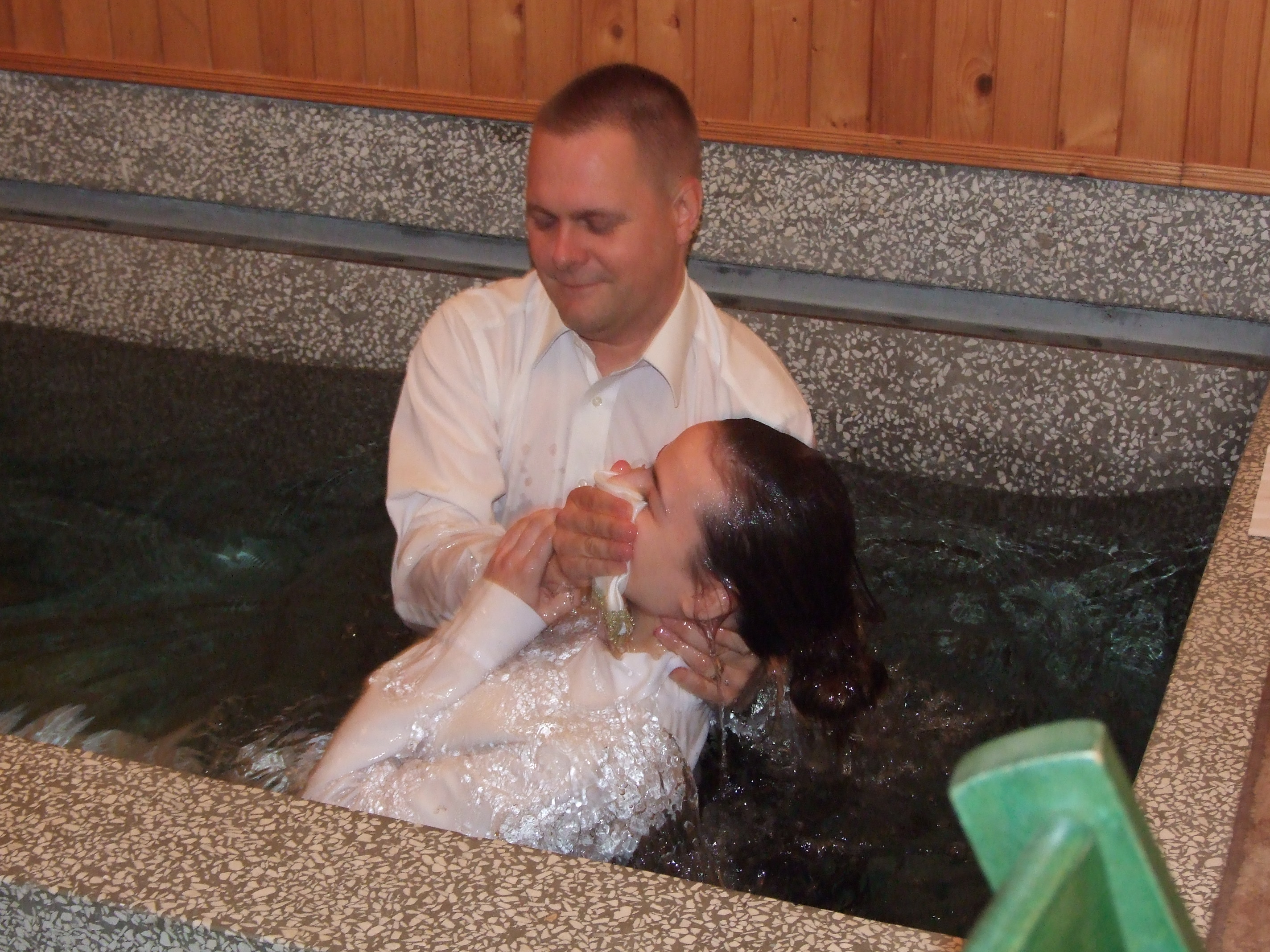
Yesterday, I had the amazing privilege of baptizing four people. All four talked about how they wanted their baptism to be a public show of their “belonging to Christ.”  We heard four completely different stories of God drawing someone to Himself. M. was connected to our church since childhood, but didn’t come to Christ until his unbelieving, alcoholic father passed away. H. was also a part of our youth group, and prayed to accept Christ at an English camp.

Baptism 2011

Baptism 2011

K. experienced every kind of violence possible as a child. She tried drugs, alcohol and sex to fill the God-void in her life. Eventually, she tried to kill herself. Three times. But then she heard about the love and grace of God – and surrendered to Him.

A. grew up in a Catholic family, with parents – especially her dad – who read the Bible and prayed regularly. However, as an adult she began to understand that she was trying to do everything on her own to gain favor with God. She asked God to change her stone heart into a heart of flesh. And God did!

Thrilling stories of God working – and what a thrill to be able to help them along their journey. Days like yesterday make it fun to be a pastor!


Barna, George. Revolution. Carol Stream, IL: Tyndale House Publishers, 2005. 145 pp.

Dr. Barna looked at what he calls a “hidden revolution” of Christ followers who no longer go to church on Sunday mornings, but remain devout believers and attempt to be the Church, rather than simply go to church. He compares the state of the Church (chapter 4 “How is the local church doing?”) with a biblical picture of the Church (chapter 3 “What does God expect?) From that biblical picture, he extrapolates the “seven passions” of revolutionaries.

In my opinion, these were the three most insightful ideas:

The seven passions of revolutionaries (chapter 3)

The seven trends leading to the “New Church” (chapter 5)

The Secret of Transformation in mini-movement (pp. 57-58, chapter 6)

In addition, the “affirmations of a revolutionary” (pp. 128-130) would resonate with many of us who have frustrations with the church as an institution, but love Jesus with all our heart.

  1. The seven passions of revolutionaries:
    1. Intimate worship
    2. Faith-based conversions
    3. Intentional spiritual growth
    4. Servanthood
    5. Resource investment
    6. Spiritual friendships
    7. Family faith
  2. Seven trends leading to the New Church:
    1. Changing of the guard
    2. Rise of a new view of life
    3. Dismissing the irrelevant
    4. Impact of technology
    5. Genuine relationships
    6. Participation in reality
    7. Finding true meaning
  3. Secret of Transformation in mini-movement:
    1. Generally working with people who are predisposed to focusing their faith on God.
    2. Mini-movement becomes an individual’s primary source of relationships.
    3. Intimacy experienced facilitates a sense of exhilaration over the transformation.
    4. Clear group goals

Each mini-movement has a very narrow focus.

The seven passions serve as an excellent guideline for our Polish faith communities. We are easily sidetracked by other things, and think those other things should be the checklist of success for our churches. But when we, in community with one another, can focus on these passions, we are much closer to what Christians should be focusing on.

I would like to use the seven trends as a springboard to look at Polish culture, and see how it has changed in the past 22 years. There are Revolutionaries in Poland, usually in house churches, or Catholic renewal groups (or both), and I am curious to see what trends have led to the rise of these groups.

The final point – the secret of transformation – helps me to narrow our focus as we seek to see transformation in people’s lives. We don’t need to change everyone, in every way, right now.

Revolution! at Amazon

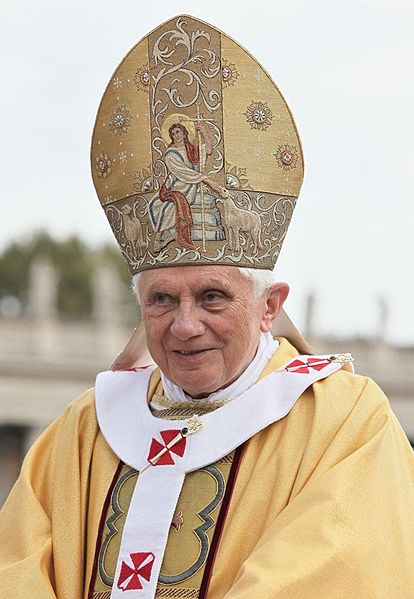
Pope Benedict XVI

Pope Benedict XVI

Last time was 600 years ago – as pretty much everyone in the Western world has now heard many times. Popes don’t resign – how can the representative of Christ, who speaks on doctrine ex cathedra, who was chosen by the Holy Spirit through the cardinals, give up his office? One Polish blogger compared the Pope’s resignation to the denial of Christ by Peter, the “first pope.” The same blogger indicated that since the Pope is abdicating, this casts doubt on all of the claims that the Church makes about the Pope anyway.

Now, like many Western Protestants, I don’t mind at all that the Pope, who is 85, is stepping down. It makes sense, he’s earned it – if only by nature of the unbelievable stress it must be to be Pope – and the Pope’s abdication has absolutely no effect on my faith, or my perception of the Roman Catholic Church. But I live and minister in Poland, one of the last real bastions of the Church. The abdication of the Pope is topic number 1 the last few days. And this is in spite of a growing resentment among many Catholics towards the Church. I think most Poles have a positive image of Benedict XVI. The cynic may say the Church has done a good job “selling” his image, but in Poland, that would have been a pretty tough sell, without some very impressive quality to go along with the image. He replaced the greatest Pole in modern history, the savior of the Polish nation from communism, Karol Wojtyła. And Ratzinger is German! But Benedict XVI has been erudite, sincere, and seemed committed to cleaning up some of the problems in the Church. Sure, he probably hasn’t been as popular as John Paul II was, certainly not in Poland – but then, who could have been?

The question really is, of course – who’s next? Who will be the next “Vicar of Christ?” And what effect will he have on the Roman Catholic Church, or even the world at large? Already Polish commentators are writing about the potential changes in the Church, if only as a result of new bishops appointed. Benedict XVI worked hard to reintroduce academia and rationalism into the Church, to reinforce Catholicism as a viable, intellectual framework. Will the new Pope continue that trend?

Or will he usher in the end of the world? Many people understand the medieval prophecies of Nostradamus and Malachy to indicate that the last Pope, Petrus Romanus, will be black, and will usher in the end of the world. Before I quote my dad, and say “hogwash”, I think many Poles would see an African Pope as just about the end of the world.

Paddypower.com lists the betting odds for the new Pope. The current front runner is from Ghana. Hmm. Cool! End of the world, here we come! Now, on the one hand, I don’t really care who becomes the next Pope. I’m not Catholic, and I’m not planning on betting on the race. However, the next Pope will have an effect on Poles – Catholic and non – and I do care deeply about that. So, this might sound strange to my fellow evangelicals in Poland, but – I’m praying for this process. Praying that God would use the choice to bring people to Himself.

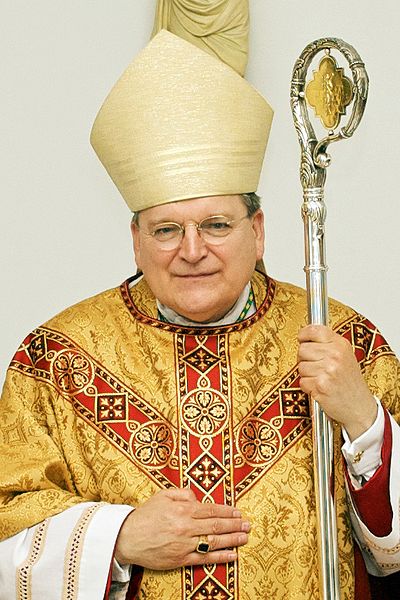
Oh – one last thing – maybe I am pulling for one candidate. Currently listed as 80 to 1 odds – I always did like an underdog. Cardinal Raymond Leo Burke, famous for refusing to give John Kerry communion, because of Kerry’s stance on abortion. Burke comes from Richland Center, WI, and is my step-grandfather’s nephew. We saw each other only once, at Grandpa Theron’s funeral, when he was still bishop of LaCrosse.  But – wouldn’t it be cool to be related to the Pope??

Raymond Leo Burke

Raymond Leo Burke

Nearly any discussion on holistic ministry, or the balance between proclamation and social action, induces strong emotions. Most of us feel strongly about one or the other, and we usually struggle to integrate proclamation of the gospel with demonstration of gospel love. Those who focus on demonstrating God’s love by meeting the physical needs of suffering humanity are frequently accused of watering down the gospel, or even ignoring man’s greatest need – that of reconciliation with his Creator. Those who focus primarily on proclamation of the truth of Jesus as the only way are seen as lacking compassion, and even ignoring man’s pressing needs that keep him from understanding the love of God.

But the Bible clearly tells us we need to do both – or rather, do it all. Proclaim God’s love and truth, do all we can for people to have access to what God says about himself and them, be incarnational representatives of the Kingdom of God anywhere and everywhere, and continually assist with the unbelievably overwhelming needs of a world that groans for its Creator, Savior and Lord. We do the gospel, the love of God toward us, and His love through us a disservice when we ignore any part of our mission.

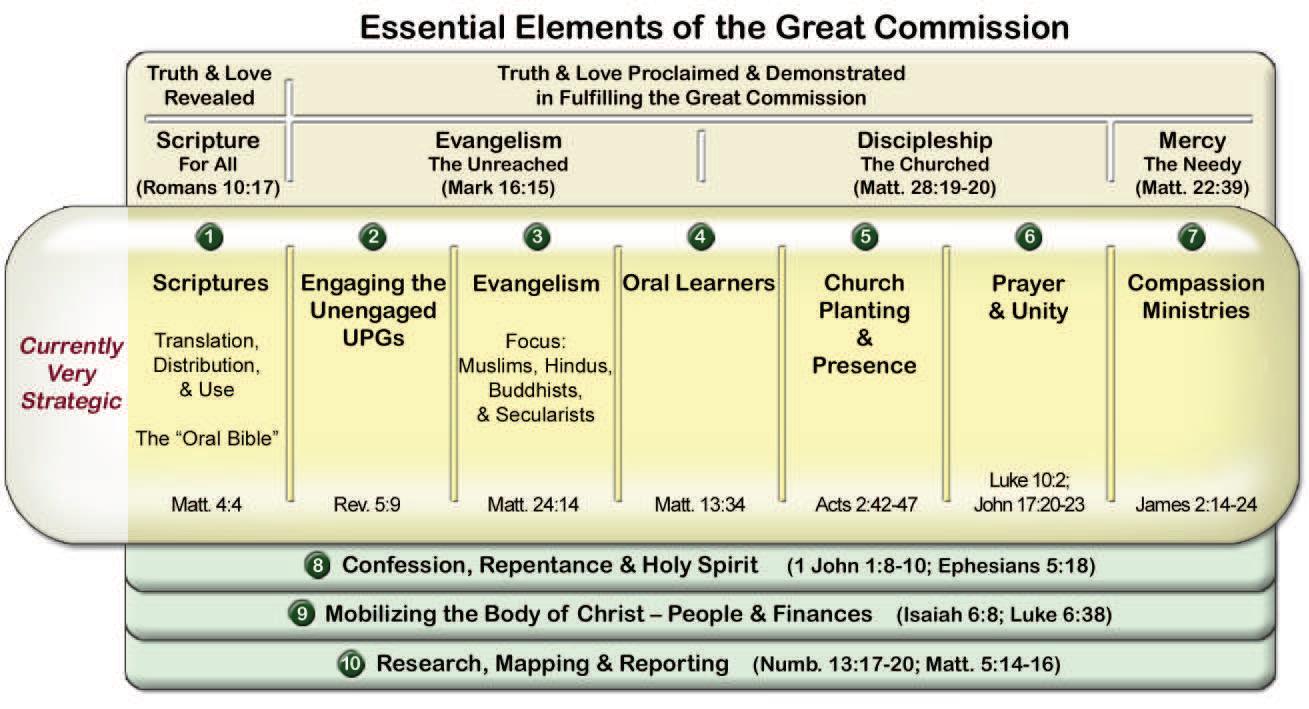
One of the best diagrams I have ever seen of the wholeness of our mission comes from a Cape Town 2010 Advance Paper written by Paul Eshleman on behalf of a Lausanne strategy working group as an overview of the topic “Priorities in World Evangelization.” I’ve included a graphic that Dr. Eshleman uses to illustrate our priorities:

whole gospel

I see numbers 1-7, in the main body of the graphic, as being of equal priority. 8-10 are necessary as well, because they enable us to do tasks 1-7.

The Lausanne Covenant summarized our task as “The whole church taking the whole gospel to the whole world,” and the 2010 Cape Town Commitment, in the Call to Action, listed a number of priorities for the church in working out that covenant. Every aspect of our task is dealt with, and both proclamation – especially of truth – and social action are strongly encouraged. And I would wholeheartedly sign my name to the Commitment. The following elements are listed: proclaiming the truth of Christ; building the peace of Christ; living the love of Christ; discerning the will of Christ; calling the church of Christ back to humility, simplicity and integrity; and partnering in the body of Christ for unity in mission. Every one of these is a necessary element of our mission. No part should be ignored.

So, there is a necessity for deed, for social action, for living the love of Christ and building the peace of Christ. Helping the helpless is a noble call, a necessary duty, and a winsome demonstration of God’s love toward His Creation. And, when we help, we don’t help just to “share the gospel.” We don’t build wells only for those who are “open to the gospel.” We help to meet the physical needs of Hindus, Christians, Muslims and atheists alike – because God loves them. No one has to “accept Christ” in order to receive our help.

I say this strongly to myself, because I still believe in the priority of proclamation. I still believe that the greatest need of mankind is the need of reconciliation with his God. But, in my own heart and ministry, there will always be a tendency to focus on proclamation and forget compassion – it’s just how I’m wired. All the more, I have to continually preach to myself – help others!! And don’t expect anything from it.

Having said that – funny things happen when you help people. First of all, their life begins to get easier – if for no other reason than that they see there is someone who cares about them. Second – your life is touched and changed. God’s love grows in you as you exercise it. Third, a trust relationship begins that does usually lead to opportunities to talk about other, significant needs – like reconciliation with God. And reconciliation with God leads to reconciliation with others, and what was probably a downward spiral in the life of the person helped begins to spiral upward instead. And that is so much fun to be a part of!

You can find the entire text of Dr. Eshleman’s paper here: http://conversation.lausanne.org/uploads/resources/files/10522/Eshleman.pdf


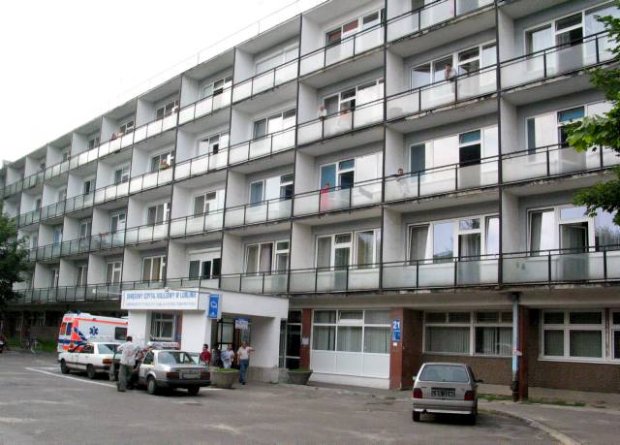
Fun facts about Polish hospitals

Posted: February 26, 2013 in Lublin, Poland
Tags: ,

23 07 2003 LUBLIN SZPITAL KOLEJOWYFOT IWONA BURDZANOWSKA / AGENCJA GAZETA

1. Bring your own toilet paper.

2. Bring your own fruit.

3. Bring your own water – you’ll get lots of tea, but water is a little less likely.

4. Bring your own towel, washcloth, toothbrush, etc. – you might be able to buy a few things, if the hospital has a little store, but don’t count on it.

5. Bring your own knife, fork, spoon, cup, and dish soap to wash them! (Thanks, Christie M., for the reminder)

6. Look forward to getting to know a few other people really, really well. Private rooms are uncommon.

7. Bring your medical records with you, and keep them with you.

8. Bring some money. Thankfully, bribing the doctors and nurses is less common than it used to be – but you’ll need to it to buy all the things you forgot to bring. Like toilet paper. And water.

9. Hope you enjoy pajamas and a robe (and slippers). That’s the required hospital fashion.

10. Don’t expect to get a lot of information. Poland is a high-context culture, you are expected to just “know” these things.

11. If you are having surgery, you are expected to provide your own blood for a possible transfusion. Or have someone donate in your place.

http://poznan.gazeta.pl/poznan/1,36001,11956036,Pacjent_przed_operacja_ma_zalatwic_krew__Szpitale_.html

12. Assuming you pay privately – which you do if you aren’t part of the national health service – expect to pay about 10% of what you would in the United States (this is the best fact of all!!) If you are in the EU health care system – most standard procedures are free.