Posts Tagged ‘Missions’

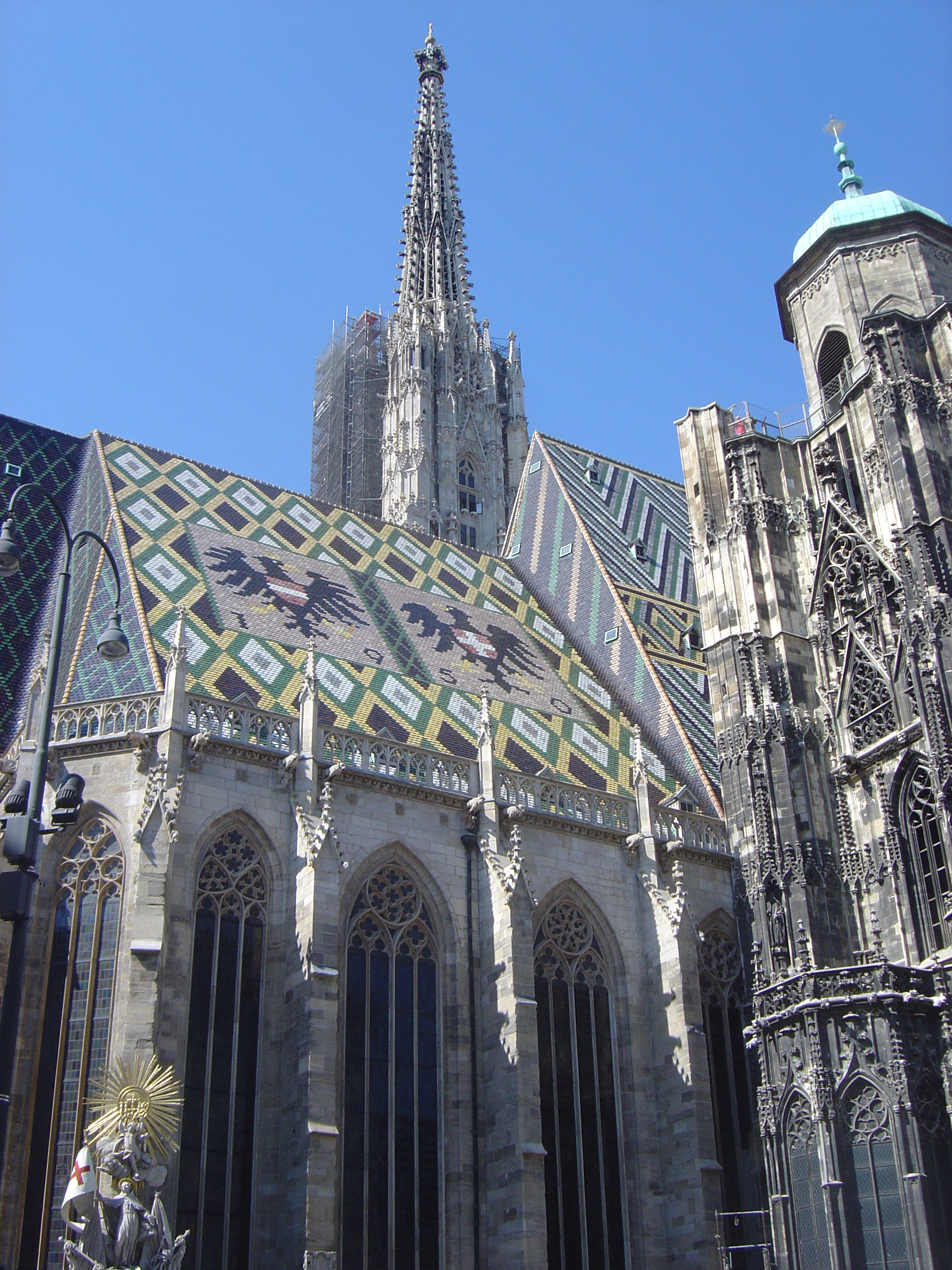
St. Stephen's

St. Stephen’s Cathedral, Vienna
from wikipedia

In part 1, I began to look at Jesus’ words from the Sermon on the Mount, as a preface to developing a strategy for making disciples of nominal Christians, especially in Europe. Now, I will finish the passage study with a look at the metaphors used by Jesus:

Our first metaphor is that of the two ways, or gates. One is narrow, the other broad. The gateway to life is narrow and difficult – the word used means tribulation, or persecution. The highway to hell, however, is broad, with overtones of prosperous,[1]and by implication, easy. With their relative size and ease, it makes perfect sense that many find the broad road, while few find – or choose – the narrow, difficult path.

“Wide gate, easy way, many travelers” – these words describe the path to destruction. Except for the destination, the road sounds like the perfect choice. There is an “abundance of liberty, no check to your temptations, nothing to hedge in those who walk in it, an abundance of company,” a walk downstream.[2] The destination, however, is destruction, everlasting separation from God, the same fate promised later in verse 23.

The trail to life has a narrow gate, a confined, difficult path with not many friends along with whom to share the journey. Of course, such an idea is not exclusively Christian. According to the Pinax or Tablet of Cebes, a contemporary of Socrates: “Seest thou not, then, a little door, and a way before the door, which is not much crowded, but very few travel it? This is the way that leadeth unto true culture.”[3] Most of the world recognizes the potential benefits of self-denial (Buddhist and Jain ascetics, Catholic and Orthodox hermits come to mind, among many others), but most of us still struggle to make such an unpopular, demanding choice. Jesus, of course, is referring to something more than simple asceticism, and the following verses expand on the choice facing every human.

Through the entire passage, there is also a series of contrasts related to religious people:

(1) the two ways of performing religious duties (13–14);

(2) the two types of religious leaders (15–23); and

(3) the two foundations of a religious life (24–27).[4]

The two types of religious leaders are contrasted by their fruit and their focus. In verse 15, false teachers are referred to as wolves in sheep’s clothing. However, we are encouraged that we can know them by their fruit. All false prophets will transgress the standards of the true believer in one or more of the following three respects:

a)   Their work will seek to glorify themselves, and not God (5:16)

b)   They will be materialistic (6:19)

c)   Their moral lives will not be pure (5:27–32).[5]

False fruits go along with a false focus. In 21-23, the focus is on the amazing works done in Jesus’ name, but the miracle-workers have forgotten to focus on a relationship with Christ. In fact, He says “I never knew you.” Although the possibility of hearing these words may puzzle – or even frighten – those who minister in Jesus’ name, concentrating on a living relationship with the living Christ, putting into practice His word, as a wise builder, removes any fear of hearing those damning words, “Depart from me!”

Jesus finishes with that picture of the wise builder, the man who doesn’t only hear His words, but applies them to life as well. “It is not enough simply to hear Jesus’ call or even to respond with some temporary flurry of good deeds. Rather, we must build a solid foundation that combines authentic commitment to Christ with persevering obedience.” [6] Crisis comes, the flood waters rise, and the wise builder is secure. The foolish builder, however, has no safety, because he has built an infirm foundation. D.A. Carson puts it this way: “Those who pretend to have faith, who have a merely intellectual commitment, or who enjoy Jesus in small doses are foolish builders.”[7]

In the next part, we will take a closer look at “small-dose” (nominal) Christians in Europe.


[1] A. H. M’Neile, The Gospel according to St. Matthew (London: Macmillan, 1915), 94.

[2] Henry, M. (1996). Matthew Henry’s commentary on the whole Bible : Complete and unabridged in one volume (Mt 7:12–14). Peabody: Hendrickson.

[3] Robertson, A. (1997). Word Pictures in the New Testament (Mt 7:13). Oak Harbor: Logos Research Systems.

[4] Utley, R. J. D. (2000). Vol. Volume 9: The First Christian Primer: Matthew. Study Guide Commentary Series (65). Marshall, Texas: Bible Lessons International.

[5] Mills, M. (1999). The Life of Christ: A Study Guide to the Gospel Record (Mt 7:15–23). Dallas, TX: 3E Ministries.

[6] Blomberg, C. (2001). Vol. 22: Matthew (electronic ed.). Logos Library System; The New American Commentary (134). Nashville: Broadman & Holman Publishers.

[7] Carson, D.A. (1984) Volume 8: Matthew The Expositor’s Bible Commentary (194). Grand Rapids, Michigan: The Zondervan Corporation.

Matthias Church Budapest, Hungary from Wikipedia

Matthias Church Budapest, Hungary from Wikipedia

An observant traveler in Europe will quickly notice the abundance of large, old, beautiful churches, but also realize that these churches are usually empty, or nearly so, even Sunday morning, during traditional “church time.” Much has been written about the growth of secularism, the death of Christianity or the rise of Islam in Europe. Most articles focus on Western Europe, where these particular trends are most evident, even conveniently ignoring much of Eastern and Central Europe. However, as we shall see, the existing Church, whether in more secularized Western Europe, or more traditional Eastern Europe, is frequently characterized by a “Christian in name only”, a Christmas-and-Easter, wedding-baptism-funeral form of Christian nominalism.

We will look at Jesus’ teaching from the end of the Sermon on the Mount, where He demands a radical choice, and use His words to examine nominal Christianity in Europe, and propose some strategies for evangelizing Europeans. Probably, some issues will be similar for nominal Christians in America, as well.

Matthew 7:13-27

13 “Enter by the narrow gate. For the gate is wide and the way is easy that leads to destruction, and those who enter by it are many. 14 For the gate is narrow and the way is hard that leads to life, and those who find it are few.

 15 “Beware of false prophets, who come to you in sheep’s clothing but inwardly are ravenous wolves. 16 You will recognize them by their fruits. Are grapes gathered from thornbushes, or figs from thistles? 17 So, every healthy tree bears good fruit, but the diseased tree bears bad fruit. 18         A healthy tree cannot bear bad fruit, nor can a diseased tree bear good fruit. 19 Every tree that does not bear good fruit is cut down and thrown into the fire. 20 Thus you will recognize them by their fruits.

 21 “Not everyone who says to me, ‘Lord, Lord,’ will enter the kingdom of heaven, but the one who does the will of my Father who is in heaven. 22 On that day many will say to me, ‘Lord, Lord, did we not prophesy in your name, and cast out demons in your name, and do many mighty works in your name?’ 23        And then will I declare to them, ‘I never knew you; depart from me, you workers of lawlessness.’

 24 “Everyone then who hears these words of mine and does them will be like a wise man who built his house on the rock. 25 And the rain fell, and the floods came, and the winds blew and beat on that house, but it did not fall, because it had been founded on the rock. 26 And everyone who hears these words of mine and does not do them will be like a foolish man who built his house on the sand. 27 And the rain fell, and the floods came, and the winds blew and beat against that house, and it fell, and great was the fall of it.” [1]

            At the conclusion of the Sermon on the Mount, Jesus presents a series of metaphors that illustrate the truth that there are only two choices for people in the world, no matter how much of a middle ground we would like to see. “He utilizes a “two-ways” genre well-known from other Jewish literature (e.g., Deut 30:15–20; 2 Esdr 7:1–16; cf. also Did. 1:1–6:7).”[2] We see two ways (13-14), two fruits (15-20), two professions (21-23) and two foundations (24-27).

Warren Wiersbe suggests that Christ proposes three tests that prove our Christianity: the test of self-denial (13–14), the test of spiritual fruit (15–23), and the test of permanence or obedience (24–27).[3] A false, counterfeit Christianity will fail these tests. Or, put in the form of three questions:

Did my profession of faith in Christ cost me anything?

Did my decision for Christ change my life?  

In the end, what will God say?[4]

In the next post, we will look more closely at the metaphors in this passage, and begin to apply Christ’s teaching to the case of the nominal Christian.
I’d love your comments as we go through this!

[1] The Holy Bible : English standard version. 2001 (Mt 7:13–27). Wheaton: Standard Bible Society.

[2] Blomberg, C. (2001). Vol. 22: Matthew (electronic ed.). Logos Library System; The New American Commentary (131). Nashville: Broadman & Holman Publishers.

[3] Wiersbe, W. W. (1997). Wiersbe’s expository outlines on the New Testament (35–36). Wheaton, Ill.: Victor Books.

[4] Wiersbe, W. W. (1996). The Bible exposition commentary (Mt 7:6–21). Wheaton, Ill.: Victor Books.

Friends have asked me several times what I do when I lead a Bible study. If they are American, I usually cringe when I hear the question. (I don’t do much of anything . . .). If they aren’t, I tell them. In most of the world, there isn’t such great access to Bible study curriculum, inductive training manuals, commentaries, Bible dictionaries and encyclopedias, so we have to let the Bible speak. In all honesty, having used lots of curricula over the years, I love the simple 6 questions that we use now.

Two things I have noticed with these questions: 1. People discuss more. I’m not the expert, and they realize they can answer most of these questions just as well as anyone can. 2. Two of the questions engage an emotional response. I know it sounds stereotypical, but the women in our groups respond more to these questions than they ever did in a prepared curriculum.

These questions have been around forever – supposedly they come from a missionary in Asia – I wish I could find the source. (Edit – John DeVries, founder of Mission21 India, came up with these questions prior to 1989) Also, they exist in different orders and wordings, and lately have become popular again with “Discovery Bible Study”. I first got them verbally, from a buddy, which seems so appropriate. He didn’t have them written out. I wrote them on a napkin a couple of times, but they are easy to remember:

Read a passage from the Bible out loud. We usually read a chapter, and usually everyone reads a few verses.

1. What don’t you understand from the passage? This is really the only question where the “expert” gets to shine.

2. What do you like from this passage?

3. What don’t you like, or what do you disagree with?

4. What do you see about God in this passage?

5. What do you want to remember this week from this passage?

6. What do you need to apply in your life from this passage?

6 questions bookmark

Here are the questions in a bookmark, with a link to a ministry that will send you more.

As you can see, my order is a little different. Other than keeping the first 3 questions before the last 3, I don’t think it really matters. And we don’t always do all 6.

I have the questions in Polish, but if you’re Polish and you’ve read this far, you can probably translate them better than I can!

Of course, this is similar to the other old standby:

What? (What does the passage say or mean?)

So what? (What does it mean in my life?)

Now what? (What do I need to do?)

The point is, you absolutely don’t need a Bible study curriculum to start reading with your friends. You don’t need a seminary degree, or years of Christian experience.

What you need to do is: Read. Discuss. Do. Every portion is equally important, and we all know that it’s the last one, DO, that usually gets neglected.

So. What are you waiting for?

McNeal, Reggie. Missional Renaissance. San Francisco: Jossey-Bass. 2009. 224 pp.

Contrary to what you might assume from the title, Missional Renaissance is not a ground-breaking book about missional church theory. McNeal did that already in his 2003 book The Present Future

This book focuses on three shifts that need to take place, both in theory and in practice, for a church to become “missional.” I took McNeal’s “Missional Leadership” class at Columbia International University, and Missional Renaissance served as the core curriculum, so we had a chance to dialogue about these shifts, and the accompanying scorecards. In a future blog post or two, I’ll share some reflections from that class.

The three shifts are:

From an internal to an external focus.

From developing programs to developing people

From church-based leadership to kingdom-based leadership.

My three top thoughts from this book:

  1. The missional church is the people of God partnering with God in His redemptive mission in the world. (24) This is a good definition – simple and easy to remember. This isn’t a paradigm shift for our ministry in Poland, but, it does show the overall shift in thinking for the church. We can use this definition to assess all we do.
  2. This is very broad – but the whole idea of changing the scorecard. What gets rewarded, gets done. Making a shift in what counts and is counted (in brief, p. 68 – but all through the book) Each chapter about one of the shifts in thinking is followed by a “scorecard” chapter, showing how we can practically apply the shift in thinking.

For me, this was the biggest value of this book. The missional theory wasn’t ground-breaking. It was fairly simple – and I don’t think the author meant it to be otherwise. The practical elements of the scorecard, however, were exactly what most of us need. We accept theory, but then hit upon the barrier of: “how do I do that?” The scorecard had a number of ways to apply missional theory, and even more important, to assess what we are doing. I think the scorecard ideas even translate well into our strategic planning in missions, and it would be great if the board and senior leadership of our mission agency read this book. We count baptisms, church plants, leaders trained, etc. – not bad, but I think we could be counting other things that equally reflect the heart of God. I also loaned this book to my U.S. pastor – who is leading a missional church, but is always looking for ways to move forward.

3. Putting prayer at the beginning of nearly every scorecard – but best of all, listing concrete ways to count prayer. That doesn’t sound radical – but it is. Finally, we have a means of counting – and rewarding – prayer.

We all give lip service to prayer. Most of us in leadership pray – quite a bit, even. But we struggle to understand how to make prayer a major part of our corporate life. I really appreciated the practical ways implement prayer, and the ways to assess if prayer is a significant part of the community of faith. I will be using a number of these to encourage prayer, but also keep track of the place of prayer in our community life.

You can get a copy of Missional Renaissance here.


Cole, Neil. Church 3.0. San Francisco: Jossey-Bass. 2010. 274 pp.

Church 3.0 is a follow-up to Cole’s earlier book, Organic Church, and is structured to answer questions that might be asked about organic churches. The terms organic, simple and house church are sometimes used interchangeably – as you might see in my review of Felicity Dale’s book, An Army of Ordinary People. In short, organic are meant to be “relational, simple, intimate and viral” (from the flyleaf of Church 3.0) and are usually separate from buildings and hierarchy.

There were a couple of things that I didn’t care for. I don’t care anymore for books that use the Bible to say “this is the only biblical way.” I think I didn’t mind that much the first 10 books I read that said that about their methods. With each new book, that makes the same claim, though, I get more and more frustrated. Of course, Cole – and every other author who writes like this – is convinced that his method has biblical support. Fine, I get that. And the Bible is our primary authority. However, I often wonder if this type of argumentation would make it very far in an academic setting with higher expectations. Of course, feel free to remind me of my words when I write my first book explaining why my method is the only biblically supported method!

The title, and assumption that organic church is the next “upgrade” on church, equal to church 1.0 (pre-Constantinian) and 2.0 (Church since Constantine) – well, seems just a little bit presumptious. However, since I don’t have near the experience that Cole does, it would be presumptious of me to criticize his presumption 🙂 This presumption looks very similar to Hirsch’s history of “missional mode” from Forgotten Ways, which I critiqued here.

Although I really liked the perspective on groups of 2 or 3, I thought he overdid it with the proof-texts in support of the idea. It might have been enough to focus on the “sendings” – Jesus sending the disciples in groups of 2 (Luke 10:1b) and the Antioch church sending Paul and Barnabas (Acts 13:2b-3) Both examples are on page 140 – where we also find Cole’s statement, based on Matthew 18:20, that “Jesus promises to join the meeting when two or three come together, no matter where or when it might be.” This strikes me as a great-sounding statement based on a verse ripped kicking and screaming from the context.

Here are my 3 favorite insights from the book:

  1. The base unit of life: two to three people. Community. Accountability. Confidentiality. Flexibility. Communication. Direction. Leadership. All are stronger with 2 or 3. (139-142)
  2. Integration is better than segregation for children and adults (211-221)
  3. A manipulative leader cannot take advantage of Life Transformation Group participants because they are not a biblically illiterate following (239)

Yeah, I know I criticized the way he took verses out of context to support the groups of 2 or 3. However, the base unit was still an eye-opening concept for me. Although the other sizes that Cole uses – leadership team (4-7), family unit (12-15), etc. are in place in our Lublin structure, we have faltered in discipleship, especially in application of Scripture and in accountability. I think implementing the 2-3 idea will be a great help. This size is probably most cross-cultural, as well, whereas I think the other sizes would need to be adjusted in other cultures.

We haven’t integrated children in our groups. These groups have ranged from a simple Bible study to house church, but we still haven’t included children. Sometimes it happens unintentionally, but if we are able, we usually send them to do something else. However, in WI, in our LifeGroup, we involved 3 young children, and all of us were better for it. We ought to be able to do the same in Poland.

I loved the emphasis on discipleship throughout the book. The idea of people reading large portions of Scripture in the 2-3 groups, and being accountable for application really should help produce literate, biblically-informed, obedient disciples. Those kinds of people are much less susceptible to heresy than those multitudes who gather around a charismatic manipulator – demagogue. Life Transformation Groups mitigate against demagogy, and do seem to be an excellent bulwark against heresy. I think Cole might be overstating it when he says a manipulative leader cannot take advantage of people in a Life Transformation Group, but I can see where it would be much more difficult than in large, more biblically ignorant group.

You can buy Church 3.0 at Amazon.


Hirsch, Alan. The Forgotten Ways: Reactivating the Missional Church. Grand Rapids: Brazos Press. 2006. 304 pp.

The Forgotten Ways is one of those books that simply destroys old paradigms and introduces completely new concepts. Hirsch attempts to describe the “apostolic genius” of the early church, and challenge the contemporary Western Church to recapture that “missional DNA.”

There’s a great little chart on page 64 that summarizes the church in the three modes he describes: the apostolic and post-apostolic, the christendom mode, and the emerging missional mode . However, the chart highlights my disagreements with the book. If I had two criticisms, they would be related to Hirsch’s history-telling.

1. I don’t think the picture Hirsch paints of the apostolic church was really quite so rosy in reality. Yes, the church grew very fast, and was characterized by a focus on mission. But there were some serous theological battles, that led to large portions of the Church separating from one another. In addition, although the “christendom” mode did see a consolidation and stagnation, there was still a strong focus on expansion, and significant Christian “missional” activity.

2. The “missional” mode, according to Hirsch, has been over the past 10 years. (Counting back from 2006). This unbelievably Western-centric viewpoint is actually uncharacteristic of Hirsch – it would be interesting to see if he changed this chart in the second edition. Hirsch himself refers to other “missional” movements, outside the West, that precede the recent wave of books with “missional” in their title or subtitle.  Seriously – I think he really may be dating the missional mode from the 1998 publication of Missional Church

Of course, we missionaries have frequently been guilty of exporting institutional church – but not always. And around the world, Hirsch’s missional DNA has been present in many places, throughout Christian history.

In spite of that criticism, I actually thought Hirsch did a better job of not gushing over American methods than most authors in this “missional” movement. He is Australian – which certainly helps – but he also focused on the theory behind practice, making this book easier to apply cross-culturally.

The missional DNA looks like this:

  1. Jesus Is Lord: A simple, but irreplaceable confession.
  2. Disciple Making: becoming like Jesus is at the core of the church.
  3. Missional-Incarnational Impulse: the gospel is lived out across cultures and people groups.
  4. Apostolic Environment: a certain type of leadership is necessary.
  5. Organic Systems: structures for growth.
  6. Communitas, not Community: We are sent, not gathered into a safe haven.

Brief digression – I loved the Paulo Coelho quote on p. 217, introducing the chapter on communitas: “The ship is safest when it is in port. But that’s not what ships were made for.”

I picked out 3 ideas that I thought were basic:

  1. Non-dualistic spirituality (p. 96). Hirsch’s diagram, contrasting dualistic and non-dualistic spirituality, i.e. integrating sacred and secular, really helped me to see and understand how I was doing that in my life, but also how to better communicate to others an integrated spirituality that includes God, church and world.
  2. The quality of the church’s leadership is directly proportional to the quality of discipleship (p. 119) Discipleship is primary, leadership is always secondary. This is a key concept – maybe even THE key concept. (It’s one of those “duh” ideas – of course leadership is dependent on discipleship – that has been simply ignored most of the time)
  3. Greek concept of knowledge contrasted with Hebrew concept of knowledge. (p. 124) The Greek concept is that right thinking leads to right action. Hebrew – right action leads to right thinking. Hirsch uses this in his chapter on disciple making, but the paradigm definitely applies for leadership training as well – but we very, very seldom apply this concept

A change toward missional thinking is really not just about following a new fad in church development. The spiritual concept Hirsch shares illustrates that it is about bringing all things, every sphere of our lives, under the lordship of Christ. We preach that, but we don’t always mean it, especially if it means significantly changing the church.

The last point resonates with a key factor in church planting movements around the world – obedience-based discipleship. In other words, doing what the Word says MUST go hand-in-hand with knowing what the Word says.

If you want to know a little more about the terms and history of the “missional” church movement – there’s a pretty good summary in J.R. Woodward’s blog here. If you’ve read and tried to apply Newbigin and Bosch – as most cross-cultural missionaries will have – Hirsch’s book will seem very basic in many areas.

However, if you love reading books that challenge your thinking about the church, or if you see that the church, as it is usually conceived, comes up short in reaching a culture that grows more “foreign” with every year – this is a great read.

You can buy Forgotten Ways at Amazon.

Near the end of 2011, I wrote about our African friend who had escaped from an unbelievably intolerable existence. That story is here. In short, our friend, Susie (not her real name, of course), had married a Polish mercenary in Liberia. This man, with a history as a wife beater, brought Susie back to Poland, where she lived   in his unfinished home, frequently with no heat or electricity, and with a growing pile of garbage in the garage, since he never paid any bills. He continued to beat her and do other awful things to her, but a number of factors made it difficult for her to leave.

However, as you can read in the linked story, she was able to leave, and find refuge in our church building. We organized legal assistance for her, a Nigerian friend helped her get her immigration status squared away (her husband had lied to the authorities in her name), and other friends have helped her figure out how to make it on her own. Although life is still difficult for her and her daughter, she feels free, finally, and no longer must live in fear.

Which is not to say she isn’t still afraid, sometimes. As with most victims of domestic violence, the simple thought of her husband can bring feelings of dread, and panic. However, we can see growth here, too. Thank God for his healing power.

When I first wrote about Susie, her husband had been in jail for 3 months, but then had been released. In Poland, a person can be sent to jail for up to 3 months, while an investigation is conducted, simply on the request of a prosecuting attorney. Now, my American sensibilities think this is unfair – but it didn’t stop us from being very grateful for it! However, after the 3 months were up, he showed up right away at our church building and began harassing Susie again.

He would follow her as she walked their daughter to school, cursing and insulting her. He regularly tried to take the daughter out of school, and once succeeded. Thankfully, he brought her back after a couple of days, but he tried everything he could do assert some sort of power over Susie. Once, he pushed her down in the street. When we went to the police to make a report, the officer in charge told me that such things are  allowed in Poland. Evidently, you can hit someone once, without being charged. (No, I didn’t ask the officer to step outside – pretty sure that rule doesn’t apply to hitting a police officer . . .)

One time, he came to the church, saw Susie outside, ran up and starting hitting and choking her. Thankfully, our building caretaker saw what was happening and called the police. The police made the daughter (who was 7), tell what her dad had done to her mom, but didn’t arrest the man. These kinds of things continued for about a year, until the prosecuting attorney did some follow-up investigation, talked to us again, as well as the director of the school, and had him put back in prison.

Along the way, we have seen God intervene over and over. Both times that he was imprisoned, it came as a surprise – but a welcome one. We have seen how a number of Poles have sacrificed to help her – even risking retaliation from her husband. God has worked through all of these people. And I get a kick out of telling them so, since a few of the most helpful don’t really want all that much to do with God! But God is using them, too!

At the same time, though, we have seen some of the uglier parts of the Polish system. Some of the police have treated Susie with disdain, partly because she is black, and a woman, but mostly because she can’t speak Polish. During the first criminal hearing, a translator for Susie was not supplied, and she ended up agreeing to something that would have hurt her case. However, when another friend of ours informed a journalist, and organized some observers from the Helsinki Foundation for Human Rights – somehow all the records from that first hearing had been deleted from the computer. . . This was good for Susie, but certainly raised some questions in our minds!

Today, Kaye and I were supposed to be witnesses in the next criminal hearing. Our testimony is pretty significant, since we were the primary witnesses to the beating that preceded the police intervention that finally began the criminal process – after a number of other beatings that the police responded to, but never initiated an investigation. And of course, we have been witnesses to the husband’s continued harassment, stalking, and violence.

But – Susie’s husband is in a mental institution, under observation. So, the case has been delayed, again. However, no one from the court told us. No – the court secretary phoned a Polish witness, and asked her to tell us, and Susie. Oh, well.

Please keep praying for Susie, and for us – especially Kaye, and for all the people helping Susie – her lawyer, friends from church, a kind lady from Family Services, a nurse who has helped immensely, and of course for Susie’s daughter.


Hugh Halter and Matt Smay, And: The Gathered and Scattered Church. Grand Rapids: Zondervan. 2010. 208 pp.

AND is an attempt to reconcile the attractional model of church with the missional model. The attractional models focuses on bringing people into the church, then discipling them. The missional model focuses on sending disciples into the world, where they can be incarnational, and make other disciples. Halter and Smay reconcile the two approaches with the idea that BOTH are necessary.

The three most insightful thoughts, in my opinion:

1. The missionary flow – engaging culture, forming community, structuring congregation. Even working backwards – starting from established structures, all three steps are necessary. (54)

I appreciated the inclusion of both directions – starting from scratch, as well as starting from structure. I also appreciated the terminology – that this is a missionary flow. The U.S. church could learn much by listening to missionaries who have a lot of experience engaging culture. We are forced, from the very beginning, to closely examine the cultures that we have voluntarily joined. The North American church of today is living in a culture that is nearly as foreign as is the eastern European culture that I live in. I can help my American friends by dropping hints about how to study and learn the culture they live in.

2. Engaging the culture – becoming good friends with people – takes 2 years. Everywhere. (57)

This was an eye-opening comment. We do expect it to happen much faster, and then wonder why it doesn’t. In our own ministry, we wondered why it took that long to get to know our neighbors, why it took so long to get invited to someone’s house. Even after the barrier of Polish was overcome, friendships didn’t develop quickly. So, the idea that a church can be planted, from scratch, in less than 2 years is a pretty crazy one. But, we continue to expect just that. In fact, when it doesn’t happen, we get more tempted to take shortcuts, such as inviting people from other churches to come join us (sheep-stealing), or we get very discouraged, and think that something is very wrong with us that no one wants to be our friend. It just takes time!

3. Modalic and sodalic are both necessary arms of the church – but in order to bring balance our intention must begin to lean toward the sodalic. (133)

Halter and Smay simplify their terms with this short explanation: “Modalic structures tend to focus on caring for those who are already inside the structure. Sodalities push toward those on the outside.” (129)

I think that I am more involved in the sodalic than the modalic, even though I am a pastor. However, I need to take an intense, honest look at ministry. It could be that, because of my learned church culture, I am mistaken, and spend more time than I realize caring for those in the structure, or even just caring for the structure! (God forbid!)

If you are in the U.S., and interested in the discussion about missional church, this is a book you should read. If you aren’t in the U.S., and are interested in the American discussion about missional church, this would be a good book to read. If you aren’t in the U.S., and aren’t particularly interested in this uniquely American dichotomy – I wouldn’t bother reading this book.

I believe the church in most of the world figured out a long time ago that both attractional and missional are vital.

However, if you are interested, you can buy the book here: AND at Amazon

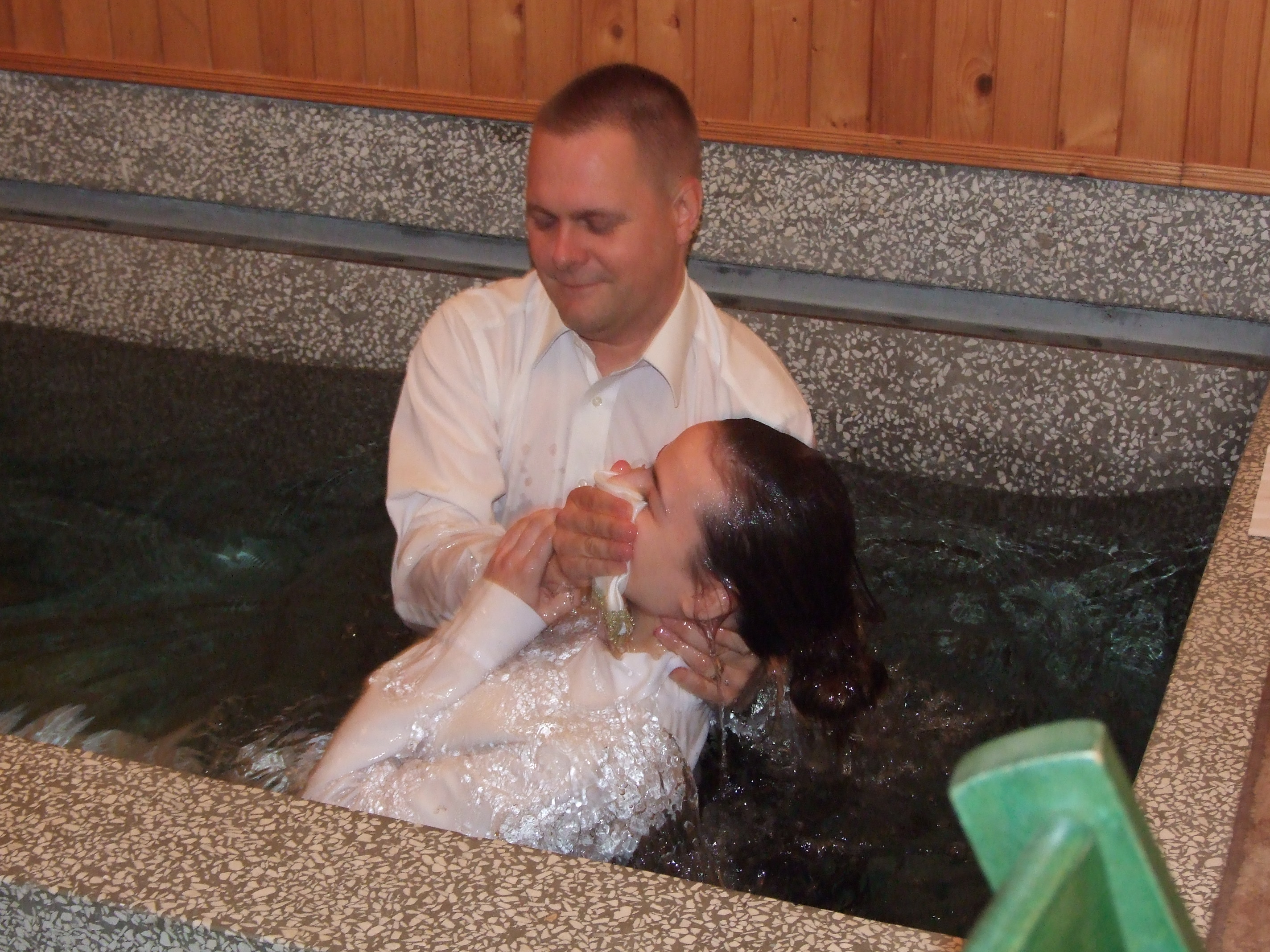
I grew up in a conservative, Baptist pastor’s family, where it was assumed that once you reached a certain age – 8 or 9 – and had prayed a prayer of salvation, you would get baptized. My wife had a similar background, and we were baptized as children. We both attended Baptist colleges, and started ministry in Baptist churches, where many ideas related to baptism were simply taken for granted – immersion, after a profession of salvation, non-salvific in itself.

For the past fourteen years we have been ministering in Poland, 12 of those years in a Baptist church. Although the beliefs in the Baptist church about baptism remain the same, none of them are taken for granted. Poland is still 90% or so Catholic, and most people in our church have some kind of a Catholic background. In other words, most of them were baptized (sprinkled) as infants, and taught that that baptism saved them. So, deciding to get baptized (or re-baptized) as an adult is a truly life-changing decision. To be honest, I don’t think it usually is that life-changing in the American evangelical churches I’m familiar with. I would have to admit that it wasn’t for me – in fact, I barely remember my baptism.

Thankfully, being baptized doesn’t have quite the cost (death, imprisonment) that it does in many countries. However, it still can mean ostracism by family and friends, because the person has “left the faith.” This only adds to the weight of the decision to get baptized. One of the implications for me in ministry is that I don’t try to rush anyone into baptism. Some pastors here do. I don’t feel that I can in good conscience manipulate someone into a decision that may have significant consequences for them. Of course, I teach about baptism, encourage people to get baptized, and am over-joyed when they choose to do so.

One of the factors for me is the belief that baptism doesn’t save. Of course, not every evangelical would agree – that’s fine. But I want to make sure, if possible, that the candidate is not simply exchanging an evangelical salvation by works for their Catholic one.

It’s also interesting that here in Poland, the key point that people emphasize is baptism as an adult – or at least after a certain age. This seems more important than immersion, more important even than the discussion of the saving grace of baptism. In fact, there are people in our Baptist church that believe that baptism – at least in part – saves them (yeah, I know – not a Baptist doctrine – welcome to the reality of church.) But the idea of baptizing children is unthinkable. And they struggle every time an American missionary family asks if their children can be baptized!

Yesterday, I had the amazing privilege of baptizing four people. All four talked about how they wanted their baptism to be a public show of their “belonging to Christ.”  We heard four completely different stories of God drawing someone to Himself. M. was connected to our church since childhood, but didn’t come to Christ until his unbelieving, alcoholic father passed away. H. was also a part of our youth group, and prayed to accept Christ at an English camp.

Baptism 2011

Baptism 2011

K. experienced every kind of violence possible as a child. She tried drugs, alcohol and sex to fill the God-void in her life. Eventually, she tried to kill herself. Three times. But then she heard about the love and grace of God – and surrendered to Him.

A. grew up in a Catholic family, with parents – especially her dad – who read the Bible and prayed regularly. However, as an adult she began to understand that she was trying to do everything on her own to gain favor with God. She asked God to change her stone heart into a heart of flesh. And God did!

Thrilling stories of God working – and what a thrill to be able to help them along their journey. Days like yesterday make it fun to be a pastor!


Barna, George. Revolution. Carol Stream, IL: Tyndale House Publishers, 2005. 145 pp.

Dr. Barna looked at what he calls a “hidden revolution” of Christ followers who no longer go to church on Sunday mornings, but remain devout believers and attempt to be the Church, rather than simply go to church. He compares the state of the Church (chapter 4 “How is the local church doing?”) with a biblical picture of the Church (chapter 3 “What does God expect?) From that biblical picture, he extrapolates the “seven passions” of revolutionaries.

In my opinion, these were the three most insightful ideas:

The seven passions of revolutionaries (chapter 3)

The seven trends leading to the “New Church” (chapter 5)

The Secret of Transformation in mini-movement (pp. 57-58, chapter 6)

In addition, the “affirmations of a revolutionary” (pp. 128-130) would resonate with many of us who have frustrations with the church as an institution, but love Jesus with all our heart.

  1. The seven passions of revolutionaries:
    1. Intimate worship
    2. Faith-based conversions
    3. Intentional spiritual growth
    4. Servanthood
    5. Resource investment
    6. Spiritual friendships
    7. Family faith
  2. Seven trends leading to the New Church:
    1. Changing of the guard
    2. Rise of a new view of life
    3. Dismissing the irrelevant
    4. Impact of technology
    5. Genuine relationships
    6. Participation in reality
    7. Finding true meaning
  3. Secret of Transformation in mini-movement:
    1. Generally working with people who are predisposed to focusing their faith on God.
    2. Mini-movement becomes an individual’s primary source of relationships.
    3. Intimacy experienced facilitates a sense of exhilaration over the transformation.
    4. Clear group goals

Each mini-movement has a very narrow focus.

The seven passions serve as an excellent guideline for our Polish faith communities. We are easily sidetracked by other things, and think those other things should be the checklist of success for our churches. But when we, in community with one another, can focus on these passions, we are much closer to what Christians should be focusing on.

I would like to use the seven trends as a springboard to look at Polish culture, and see how it has changed in the past 22 years. There are Revolutionaries in Poland, usually in house churches, or Catholic renewal groups (or both), and I am curious to see what trends have led to the rise of these groups.

The final point – the secret of transformation – helps me to narrow our focus as we seek to see transformation in people’s lives. We don’t need to change everyone, in every way, right now.

Revolution! at Amazon