St. Paul's Cathedral, Londonfrom wikipedia

St. Paul’s Cathedral, London
from wikipedia

As we begin to consider a strategy for reaching nominal Christians in Europe, we should first return to the Lausanne Committee’s work from 1980. Although this occasional paper is over 30 years old, it still gives us a good starting point. The paper focuses on nominal Christians among Roman Catholics, and as a result some changes would need to be made in light of the fact that 1.) a large number of Europeans identify with some other church and 2.) for all Europeans, identification with a specific church is less important than it was even just 30 years ago.

“Formulation of effective strategies for reaching nominal Christians among Roman Catholics involves at least five basic components: correct attitudes, correct doctrine, consistent lifestyles, community and interaction, and practical application and solutions.”[1]

“Correct attitudes” primarily refers to an attitude of love and humility toward Roman Catholics. Both are certainly needed, but of course, not exclusively toward Roman Catholics. Since church affiliation is increasingly less important, as is identification with a particular set of beliefs, perhaps a better, more contemporary strategy would be to search for, recognize and affirm ways in which God is speaking into the life of every individual, whether a nominal Catholic, Evangelical, or Anglican, or a secular, materialistic atheist who is still searching for meaning in life.

Within the strategy component of “sound doctrine”, the Lausanne paper contributors emphasize Bible study as the key to conversion to Jesus Christ. This certainly is key, but Jesus would remind us that simply hearing His words and assenting to them are not enough for a true disciple. Bible study and daily practice are key – not of course for a salvation based on our own works, but as evidence of a radically transformed life. Thankfully, the authors continue with several areas of doctrinal emphasis, including the lordship of Christ, that emphasize both a personal relationship with a Christ, and “that the new birth results in a progressive change of attitude and behaviour. Submission of the will and learning of daily obedience should be taught as basic to true discipleship.”[2]

Further components of the strategy outlined in the Thailand paper are: consistent life-style, one that demonstrates growth, witness and caring; community and interaction, emphasizing the Body of Christ and Family of God; and practical applications and solutions, where once again being a doer of the Word, and not simply a hearer is highlighted.

The Lausanne strategy presents some excellent guiding values for all who live in cultures dominated by nominal Christians. In fact, the paper could be redacted, removing references to Roman Catholicism, and serve as a valid starting point for evangelists in all parts of the “Christian” world. Probably all committed followers of Christ, living radically transformed lives, even those who still retain an affiliation with a church populated by nominal Christians, could then boldly agree with such a strategy to evangelize their fellow “non-practicing believers.”

Taking Jesus’ words into consideration, leaning on an understanding of what we know about “secular Christians,” and even using the Lausanne occasional paper as a starting grid, an effective strategy for seeing nominal Christians transformed by Christ must include the following elements: the Word; life-on-life witness; obedience-based discipleship; relationship and community; and the power of the Holy Spirit. Of course, these elements are present in any good strategy of Christian witness – and have been ever since Pentecost.    However, the application of such elements may be significantly different among “cultural Christians” from what it would be among tribal animists.


[1] Lausanne Occasional Paper  10: Christian Witness to Nominal Christians Among Roman Catholics, Thailand 1980 from http://www.lausanne.org/en/documents/lops/55-lop-10.html

[2] Ibid.

St. Vitus' Cathedral in Praguefrom wikipedia

St. Vitus’ Cathedral in Prague
from wikipedia

In Part I and II I looked at Matthew 7:13-27 as a beginning point for looking at “nominal” Christians, and in part III, a definition of a “secular” or nominal Christian. In this post, I will look a little more closely at “secular” Christianity in Europe.

In “Recognizing Secular Christians,” Voas and Day point out that, despite the rise of secularism, “many people remain interested in church weddings and funerals, Christmas services and local festivals. They believe in something out there, pay at least lip service to so-called Christian values (mostly concerning duties to others rather than duties to God), and may be willing to identify with a denomination.”[1] Most people in Europe can still specify their religious background, and, depending on the wording of the question, will choose some Christian affiliation. In fact, these nominal Christians comprise more than half the population in most European countries.[2]

With the waning of religious influence in Europe, though, religious identity has remained, but a religious worldview has disappeared. Usually, a Christian worldview has been replaced by a secular worldview. Many Europeans still believe in God, but He is now a much more distant God. Although most Europeans would still not define themselves as atheist or materialist, they have become “practical atheists and materialists.” Of course, once again, there is a wide range of belief across Europe. Western Europe, especially France, is frequently cited as equivalent to all of Europe, and non-Europeans picture a secular, godless society – a picture that is abominable to most Poles.

However, many Europeans continue to search for a spiritual element to their lives. As one young man, fed up with organized religion, put it recently, “I couldn’t stay in the church and remain a hypocrite, giving assent to things I didn’t believe in. But I couldn’t become an atheist, either. There had to be a third way.” 41% of Norwegians, 48% of French and 54% of Czechs claim to not believe in God, but only 10%, 19% and 20% of those respondents self-identified as “atheist,” respectively.[3] Although many European countries have a high percentage of people who do not believe in God, there remain others – e.g. Malta, Ireland, Poland and Italy – where the percentage of people who do not believe in God remains well below 10%.[4] Over half of EU citizens believe there is a God (52%), and another quarter (27%) believe there is some sort of spirit or life force. Only 18% declare that they don’t believe there is any sort of spirit, God or life force[5]

So, although secularism is certainly on the rise, all across Europe, there remains a majority of Europeans for whom God has some importance. Even the Church, although perhaps limited to weddings, baptisms, and funerals, still functions as a part of their lives. In the light of Jesus’ words, though, some importance is not enough importance. In fact, the path where God has some importance seems to be the broad road to destruction, the crowded highway to hell. Religious leaders who don’t conscientiously warn their parishioners of the danger at the end of that road should take a close look at their sheepskin robes, and make sure the wolf pelt isn’t peeking through.

Of course, the words of Jesus are not reserved for a nominal Roman Catholic, Lutheran, Orthodox or Anglican. There was no brand name attached. In fact, Jesus indicates that some might even work miracles in His name – and yet never know Him. Such a description may even better fit some Evangelicals than the aforementioned denominations. And, in truth, what would be the point of converting a nominal Catholic into a nominal Evangelical? Jesus is expecting a radical life change, squeezing through the narrow gate, climbing the black (difficult) trail, building on the hearing and obeying of His commands – a life characterized by a living, intimate relationship with Him, not by affiliation with a denomination, mental assent to a set of beliefs and periodic church attendance.

In the next posts we will begin to look at strategies for life-transformation of nominal Christians. If you are in Europe, how would you describe the “nominal” Christian in your country?

[1]  Voas, David and Abby Day. 2010. Recognizing secular Christians: Toward an unexcluded middle in the study of religion (ARDA Guiding Paper Series). State College, PA: The Association of Religion Data Archives at The Pennsylvania State University, from http://www.thearda.com/rrh/papers/guidingpapers.asp. (3)

[2] Ibid. 11

[3] Greeley, Andrew. 2003. Religion in Europe at the End of the Second Millenium. New Brunswick, NJ: Transaction Publishers. Quoted in Atheism: Contemporary Rates and Patterns, by Phil Zuckerman. Cambridge Companion to Atheism, edited by Michael Martin, University of Cambridge Press, 2007

[4] Ibid.

[5] Special Eurobarometer Special Eurobarometer Wave 63.1 225 (June 2005) 9. Apr. 2010

St. Mary's Basilica, Krakowfrom wikipedia

St. Mary’s Basilica, Krakow
from wikipedia

In Part I and II I looked at Matthew 7:13-27 as a beginning point for looking at “nominal” Christians, or (borrowing D.A. Carson’s term) “small-dose” Christianity.

Three Dollars Worth of God

I would like to buy $3 worth of God, please.
Not enough to explode my soul or disturb my sleep,
but just enough to equal a cup of warm milk
or a snooze in the sunshine.
I don’t want enough of God to make me love a black man
or pick beets with a migrant.
I want ecstasy, not transformation.
I want warmth of the womb, not a new birth.
I want a pound of the Eternal in a paper sack.
I would like to buy $3 worth of God, please.

— Wilbur Rees

Three dollars’ worth of God is a pretty small dose. Yet, such a picture appropriately describes the nominal Christian. The nominal Christian identifies himself as a Christian, but this identification does not have a great deal of impact on daily life.

The phrase “secular Christians” can be applied to the most important component of the broad intermediate group. These are people who call themselves Christian, but who for all practical purposes are secular. They live in a world centered on their social relationships, in which God has no everyday role. They do not expect God’s help, fear God’s judgment, or believe that things will happen God willing. They are indifferent to religion for the good reason that it gives them nothing of practical importance.[1]

            In their article regarding the “unexcluded middle,” David Voas and Abby Day contrast such secular Christians with “religiously committed Christians who identify with a church or denomination, believe in God, and attend services with some frequency.”[2] In the light of Jesus’ final words from the Sermon on the Mount, however, such a definition of a committed Christian is much too anemic. The Lausanne Occasional Paper 10, Christian Witness to Nominal Christians Among Roman Catholics (1980) says, “The heart of true Christianity is being a disciple of Jesus Christ in the terms of faith, love, and obedience.” Such a definition is much closer to the picture of the wise builder who has entered through the narrow gate.

Several terms are used to describe nominal Christianity: “Cultural Christianity”, “fuzzy fidelity”, “believing without belonging”, or in Poland, “believing, not practicing.” Such people are sometimes termed “lay liberals” or “Golden Rule Christians.” The last term seems somewhat ironic, when one realizes that the Golden Rule, from Matthew 7:12, is immediately followed by Jesus’ words, “Enter by the narrow gate.” In addition, religious researchers see many degrees of commitment along a continuum that includes three dimensions: belief, practice and affiliation. Belief is usually measured through surveys that ask respondents whether they agree with certain doctrinal points or articles of faith. Affiliation has traditionally referred to belonging to a particular Christian denomination, although more recently focused simply on whether one identifies oneself as Christian. Most researchers measure practice based on attendance at services. “For reasons of practicality it makes sense to work with three standard measures of religiosity: self-identification with a religion, frequency of attendance at religious services, and belief in God.”[3]

However, a definition of practice that focuses primarily on attendance at church services doesn’t fit with Jesus’ words from the Sermon on the Mount, especially not with 7:21-23. Of course, such an attendance-based definition is much easier to measure. But a more biblical definition of a nominal Christian is the one used by the Lausanne Committee in the aforementioned working paper:

A nominal Christian is a person who has not responded in repentance and faith to Jesus Christ as his personal Saviour and Lord. He is a Christian in name only. He may be very religious. He may be a practising or non-practising church member. He may give intellectual assent to basic Christian doctrines and claim to be a Christian. He may be faithful in attending liturgical rites and worship services, and be an active member involved in church affairs. But in spite of all this, he is still destined for eternal judgment (cf. Matt. 7:21-23, Jas. 2:19) because he has not committed his life to Jesus Christ (Romans 10:9-10).[4]

            Of course, this type of definition is difficult to measure through surveys. In the end, only God knows the truth of a person’s heart, and only God knows the depth of His relationship with any human being. Only Jesus can say, “Enter into My presence” or “Depart from Me, I never knew you.” We can, of course, examine the fruit of a person’s life:

“What fruits does Christ seek? He seeks:

(1) the fruit of the Spirit, or Christian character as described in the Beatitudes and Gal. 5:22–23;

(2) the fruit of the lips, testimony and praise to God (Heb. 13:15);

(3) holy living (Rom. 6:22);

(4) good works (Col. 1:10);

(5) lost souls won to Christ (Rom. 1:13).

Professing Christians may be involved in religious activities and pretend to be saved, but if they are honestly born again, they will reveal these fruits in daily life.”[5]

In the next post, I will try to describe “nominal” Christianity in Europe in more detail, and summarize the Lausanne plan for reaching nominal Christians. In the final 2 parts, I will attempt to bring together the Matthew passage, what we will see about secular Christians in Europe, and the Lausanne plan as the basis for a strategy for reaching our “Christian-in-name-only” friends and neighbors. As always, questions, comments, or corrections are welcome!!

[1] Voas, David and Abby Day. 2010. Recognizing secular Christians: Toward an unexcluded middle in the study of religion (ARDA Guiding Paper Series). State College, PA: The Association of Religion Data Archives at The Pennsylvania State University, from http://www.thearda.com/rrh/papers/guidingpapers.asp. (3)

[2] Ibid. (2)

[3] Ibid. 6

[4] Lausanne Occasional Paper  10: Christian Witness to Nominal Christians Among Roman Catholics, Thailand 1980 from http://www.lausanne.org/en/documents/lops/55-lop-10.html

[5] Wiersbe, W. W. (1997). Wiersbe’s expository outlines on the New Testament (36). Wheaton, Ill.: Victor Books.

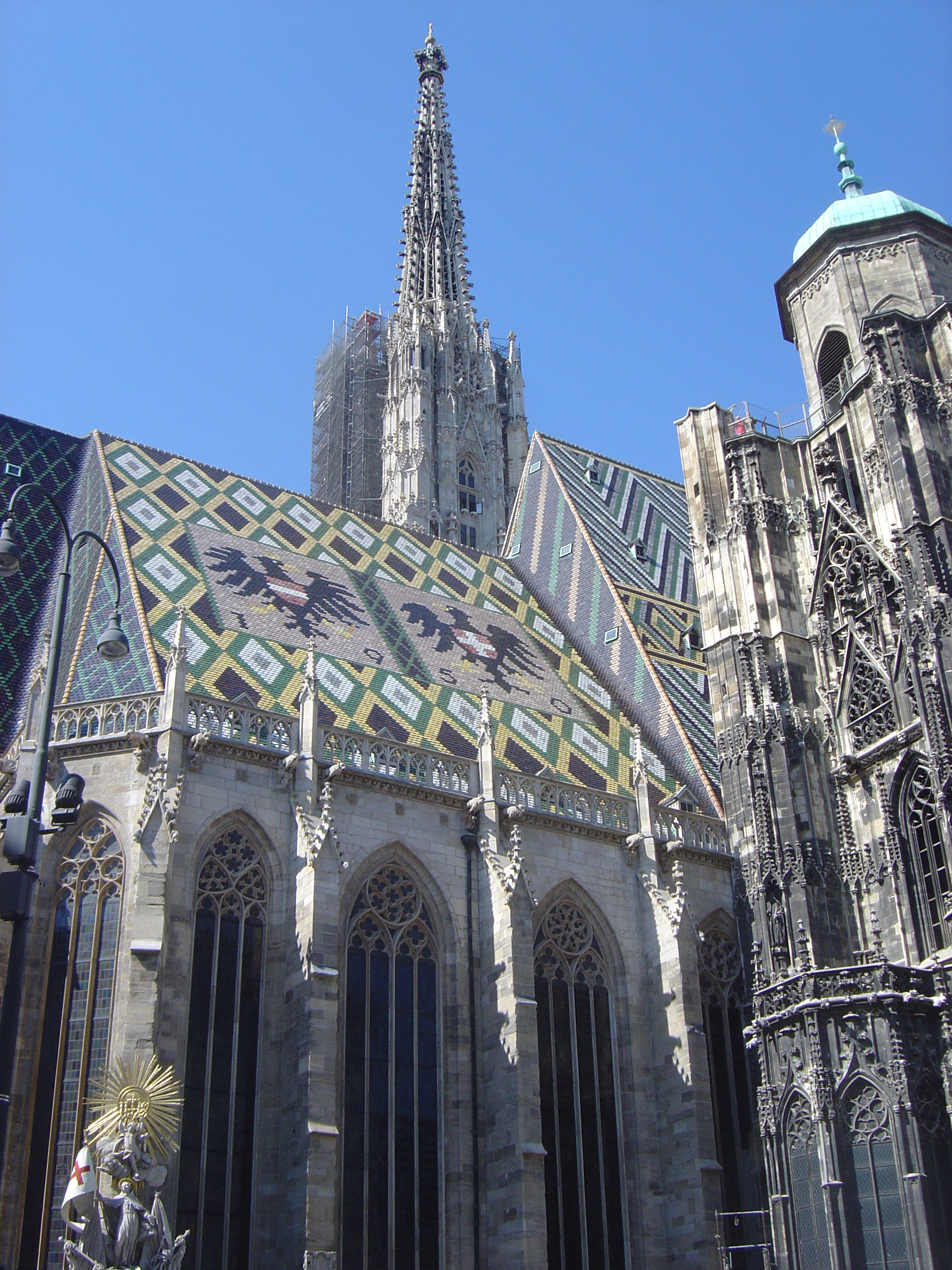
St. Stephen's

St. Stephen’s Cathedral, Vienna
from wikipedia

In part 1, I began to look at Jesus’ words from the Sermon on the Mount, as a preface to developing a strategy for making disciples of nominal Christians, especially in Europe. Now, I will finish the passage study with a look at the metaphors used by Jesus:

Our first metaphor is that of the two ways, or gates. One is narrow, the other broad. The gateway to life is narrow and difficult – the word used means tribulation, or persecution. The highway to hell, however, is broad, with overtones of prosperous,[1]and by implication, easy. With their relative size and ease, it makes perfect sense that many find the broad road, while few find – or choose – the narrow, difficult path.

“Wide gate, easy way, many travelers” – these words describe the path to destruction. Except for the destination, the road sounds like the perfect choice. There is an “abundance of liberty, no check to your temptations, nothing to hedge in those who walk in it, an abundance of company,” a walk downstream.[2] The destination, however, is destruction, everlasting separation from God, the same fate promised later in verse 23.

The trail to life has a narrow gate, a confined, difficult path with not many friends along with whom to share the journey. Of course, such an idea is not exclusively Christian. According to the Pinax or Tablet of Cebes, a contemporary of Socrates: “Seest thou not, then, a little door, and a way before the door, which is not much crowded, but very few travel it? This is the way that leadeth unto true culture.”[3] Most of the world recognizes the potential benefits of self-denial (Buddhist and Jain ascetics, Catholic and Orthodox hermits come to mind, among many others), but most of us still struggle to make such an unpopular, demanding choice. Jesus, of course, is referring to something more than simple asceticism, and the following verses expand on the choice facing every human.

Through the entire passage, there is also a series of contrasts related to religious people:

(1) the two ways of performing religious duties (13–14);

(2) the two types of religious leaders (15–23); and

(3) the two foundations of a religious life (24–27).[4]

The two types of religious leaders are contrasted by their fruit and their focus. In verse 15, false teachers are referred to as wolves in sheep’s clothing. However, we are encouraged that we can know them by their fruit. All false prophets will transgress the standards of the true believer in one or more of the following three respects:

a)   Their work will seek to glorify themselves, and not God (5:16)

b)   They will be materialistic (6:19)

c)   Their moral lives will not be pure (5:27–32).[5]

False fruits go along with a false focus. In 21-23, the focus is on the amazing works done in Jesus’ name, but the miracle-workers have forgotten to focus on a relationship with Christ. In fact, He says “I never knew you.” Although the possibility of hearing these words may puzzle – or even frighten – those who minister in Jesus’ name, concentrating on a living relationship with the living Christ, putting into practice His word, as a wise builder, removes any fear of hearing those damning words, “Depart from me!”

Jesus finishes with that picture of the wise builder, the man who doesn’t only hear His words, but applies them to life as well. “It is not enough simply to hear Jesus’ call or even to respond with some temporary flurry of good deeds. Rather, we must build a solid foundation that combines authentic commitment to Christ with persevering obedience.” [6] Crisis comes, the flood waters rise, and the wise builder is secure. The foolish builder, however, has no safety, because he has built an infirm foundation. D.A. Carson puts it this way: “Those who pretend to have faith, who have a merely intellectual commitment, or who enjoy Jesus in small doses are foolish builders.”[7]

In the next part, we will take a closer look at “small-dose” (nominal) Christians in Europe.


[1] A. H. M’Neile, The Gospel according to St. Matthew (London: Macmillan, 1915), 94.

[2] Henry, M. (1996). Matthew Henry’s commentary on the whole Bible : Complete and unabridged in one volume (Mt 7:12–14). Peabody: Hendrickson.

[3] Robertson, A. (1997). Word Pictures in the New Testament (Mt 7:13). Oak Harbor: Logos Research Systems.

[4] Utley, R. J. D. (2000). Vol. Volume 9: The First Christian Primer: Matthew. Study Guide Commentary Series (65). Marshall, Texas: Bible Lessons International.

[5] Mills, M. (1999). The Life of Christ: A Study Guide to the Gospel Record (Mt 7:15–23). Dallas, TX: 3E Ministries.

[6] Blomberg, C. (2001). Vol. 22: Matthew (electronic ed.). Logos Library System; The New American Commentary (134). Nashville: Broadman & Holman Publishers.

[7] Carson, D.A. (1984) Volume 8: Matthew The Expositor’s Bible Commentary (194). Grand Rapids, Michigan: The Zondervan Corporation.

Matthias Church Budapest, Hungary from Wikipedia

Matthias Church Budapest, Hungary from Wikipedia

An observant traveler in Europe will quickly notice the abundance of large, old, beautiful churches, but also realize that these churches are usually empty, or nearly so, even Sunday morning, during traditional “church time.” Much has been written about the growth of secularism, the death of Christianity or the rise of Islam in Europe. Most articles focus on Western Europe, where these particular trends are most evident, even conveniently ignoring much of Eastern and Central Europe. However, as we shall see, the existing Church, whether in more secularized Western Europe, or more traditional Eastern Europe, is frequently characterized by a “Christian in name only”, a Christmas-and-Easter, wedding-baptism-funeral form of Christian nominalism.

We will look at Jesus’ teaching from the end of the Sermon on the Mount, where He demands a radical choice, and use His words to examine nominal Christianity in Europe, and propose some strategies for evangelizing Europeans. Probably, some issues will be similar for nominal Christians in America, as well.

Matthew 7:13-27

13 “Enter by the narrow gate. For the gate is wide and the way is easy that leads to destruction, and those who enter by it are many. 14 For the gate is narrow and the way is hard that leads to life, and those who find it are few.

 15 “Beware of false prophets, who come to you in sheep’s clothing but inwardly are ravenous wolves. 16 You will recognize them by their fruits. Are grapes gathered from thornbushes, or figs from thistles? 17 So, every healthy tree bears good fruit, but the diseased tree bears bad fruit. 18         A healthy tree cannot bear bad fruit, nor can a diseased tree bear good fruit. 19 Every tree that does not bear good fruit is cut down and thrown into the fire. 20 Thus you will recognize them by their fruits.

 21 “Not everyone who says to me, ‘Lord, Lord,’ will enter the kingdom of heaven, but the one who does the will of my Father who is in heaven. 22 On that day many will say to me, ‘Lord, Lord, did we not prophesy in your name, and cast out demons in your name, and do many mighty works in your name?’ 23        And then will I declare to them, ‘I never knew you; depart from me, you workers of lawlessness.’

 24 “Everyone then who hears these words of mine and does them will be like a wise man who built his house on the rock. 25 And the rain fell, and the floods came, and the winds blew and beat on that house, but it did not fall, because it had been founded on the rock. 26 And everyone who hears these words of mine and does not do them will be like a foolish man who built his house on the sand. 27 And the rain fell, and the floods came, and the winds blew and beat against that house, and it fell, and great was the fall of it.” [1]

            At the conclusion of the Sermon on the Mount, Jesus presents a series of metaphors that illustrate the truth that there are only two choices for people in the world, no matter how much of a middle ground we would like to see. “He utilizes a “two-ways” genre well-known from other Jewish literature (e.g., Deut 30:15–20; 2 Esdr 7:1–16; cf. also Did. 1:1–6:7).”[2] We see two ways (13-14), two fruits (15-20), two professions (21-23) and two foundations (24-27).

Warren Wiersbe suggests that Christ proposes three tests that prove our Christianity: the test of self-denial (13–14), the test of spiritual fruit (15–23), and the test of permanence or obedience (24–27).[3] A false, counterfeit Christianity will fail these tests. Or, put in the form of three questions:

Did my profession of faith in Christ cost me anything?

Did my decision for Christ change my life?  

In the end, what will God say?[4]

In the next post, we will look more closely at the metaphors in this passage, and begin to apply Christ’s teaching to the case of the nominal Christian.
I’d love your comments as we go through this!

[1] The Holy Bible : English standard version. 2001 (Mt 7:13–27). Wheaton: Standard Bible Society.

[2] Blomberg, C. (2001). Vol. 22: Matthew (electronic ed.). Logos Library System; The New American Commentary (131). Nashville: Broadman & Holman Publishers.

[3] Wiersbe, W. W. (1997). Wiersbe’s expository outlines on the New Testament (35–36). Wheaton, Ill.: Victor Books.

[4] Wiersbe, W. W. (1996). The Bible exposition commentary (Mt 7:6–21). Wheaton, Ill.: Victor Books.

Friends have asked me several times what I do when I lead a Bible study. If they are American, I usually cringe when I hear the question. (I don’t do much of anything . . .). If they aren’t, I tell them. In most of the world, there isn’t such great access to Bible study curriculum, inductive training manuals, commentaries, Bible dictionaries and encyclopedias, so we have to let the Bible speak. In all honesty, having used lots of curricula over the years, I love the simple 6 questions that we use now.

Two things I have noticed with these questions: 1. People discuss more. I’m not the expert, and they realize they can answer most of these questions just as well as anyone can. 2. Two of the questions engage an emotional response. I know it sounds stereotypical, but the women in our groups respond more to these questions than they ever did in a prepared curriculum.

These questions have been around forever – supposedly they come from a missionary in Asia – I wish I could find the source. (Edit – John DeVries, founder of Mission21 India, came up with these questions prior to 1989) Also, they exist in different orders and wordings, and lately have become popular again with “Discovery Bible Study”. I first got them verbally, from a buddy, which seems so appropriate. He didn’t have them written out. I wrote them on a napkin a couple of times, but they are easy to remember:

Read a passage from the Bible out loud. We usually read a chapter, and usually everyone reads a few verses.

1. What don’t you understand from the passage? This is really the only question where the “expert” gets to shine.

2. What do you like from this passage?

3. What don’t you like, or what do you disagree with?

4. What do you see about God in this passage?

5. What do you want to remember this week from this passage?

6. What do you need to apply in your life from this passage?

6 questions bookmark

Here are the questions in a bookmark, with a link to a ministry that will send you more.

As you can see, my order is a little different. Other than keeping the first 3 questions before the last 3, I don’t think it really matters. And we don’t always do all 6.

I have the questions in Polish, but if you’re Polish and you’ve read this far, you can probably translate them better than I can!

Of course, this is similar to the other old standby:

What? (What does the passage say or mean?)

So what? (What does it mean in my life?)

Now what? (What do I need to do?)

The point is, you absolutely don’t need a Bible study curriculum to start reading with your friends. You don’t need a seminary degree, or years of Christian experience.

What you need to do is: Read. Discuss. Do. Every portion is equally important, and we all know that it’s the last one, DO, that usually gets neglected.

So. What are you waiting for?

McNeal, Reggie. Missional Renaissance. San Francisco: Jossey-Bass. 2009. 224 pp.

Contrary to what you might assume from the title, Missional Renaissance is not a ground-breaking book about missional church theory. McNeal did that already in his 2003 book The Present Future

This book focuses on three shifts that need to take place, both in theory and in practice, for a church to become “missional.” I took McNeal’s “Missional Leadership” class at Columbia International University, and Missional Renaissance served as the core curriculum, so we had a chance to dialogue about these shifts, and the accompanying scorecards. In a future blog post or two, I’ll share some reflections from that class.

The three shifts are:

From an internal to an external focus.

From developing programs to developing people

From church-based leadership to kingdom-based leadership.

My three top thoughts from this book:

  1. The missional church is the people of God partnering with God in His redemptive mission in the world. (24) This is a good definition – simple and easy to remember. This isn’t a paradigm shift for our ministry in Poland, but, it does show the overall shift in thinking for the church. We can use this definition to assess all we do.
  2. This is very broad – but the whole idea of changing the scorecard. What gets rewarded, gets done. Making a shift in what counts and is counted (in brief, p. 68 – but all through the book) Each chapter about one of the shifts in thinking is followed by a “scorecard” chapter, showing how we can practically apply the shift in thinking.

For me, this was the biggest value of this book. The missional theory wasn’t ground-breaking. It was fairly simple – and I don’t think the author meant it to be otherwise. The practical elements of the scorecard, however, were exactly what most of us need. We accept theory, but then hit upon the barrier of: “how do I do that?” The scorecard had a number of ways to apply missional theory, and even more important, to assess what we are doing. I think the scorecard ideas even translate well into our strategic planning in missions, and it would be great if the board and senior leadership of our mission agency read this book. We count baptisms, church plants, leaders trained, etc. – not bad, but I think we could be counting other things that equally reflect the heart of God. I also loaned this book to my U.S. pastor – who is leading a missional church, but is always looking for ways to move forward.

3. Putting prayer at the beginning of nearly every scorecard – but best of all, listing concrete ways to count prayer. That doesn’t sound radical – but it is. Finally, we have a means of counting – and rewarding – prayer.

We all give lip service to prayer. Most of us in leadership pray – quite a bit, even. But we struggle to understand how to make prayer a major part of our corporate life. I really appreciated the practical ways implement prayer, and the ways to assess if prayer is a significant part of the community of faith. I will be using a number of these to encourage prayer, but also keep track of the place of prayer in our community life.

You can get a copy of Missional Renaissance here.


Cole, Neil. Church 3.0. San Francisco: Jossey-Bass. 2010. 274 pp.

Church 3.0 is a follow-up to Cole’s earlier book, Organic Church, and is structured to answer questions that might be asked about organic churches. The terms organic, simple and house church are sometimes used interchangeably – as you might see in my review of Felicity Dale’s book, An Army of Ordinary People. In short, organic are meant to be “relational, simple, intimate and viral” (from the flyleaf of Church 3.0) and are usually separate from buildings and hierarchy.

There were a couple of things that I didn’t care for. I don’t care anymore for books that use the Bible to say “this is the only biblical way.” I think I didn’t mind that much the first 10 books I read that said that about their methods. With each new book, that makes the same claim, though, I get more and more frustrated. Of course, Cole – and every other author who writes like this – is convinced that his method has biblical support. Fine, I get that. And the Bible is our primary authority. However, I often wonder if this type of argumentation would make it very far in an academic setting with higher expectations. Of course, feel free to remind me of my words when I write my first book explaining why my method is the only biblically supported method!

The title, and assumption that organic church is the next “upgrade” on church, equal to church 1.0 (pre-Constantinian) and 2.0 (Church since Constantine) – well, seems just a little bit presumptious. However, since I don’t have near the experience that Cole does, it would be presumptious of me to criticize his presumption 🙂 This presumption looks very similar to Hirsch’s history of “missional mode” from Forgotten Ways, which I critiqued here.

Although I really liked the perspective on groups of 2 or 3, I thought he overdid it with the proof-texts in support of the idea. It might have been enough to focus on the “sendings” – Jesus sending the disciples in groups of 2 (Luke 10:1b) and the Antioch church sending Paul and Barnabas (Acts 13:2b-3) Both examples are on page 140 – where we also find Cole’s statement, based on Matthew 18:20, that “Jesus promises to join the meeting when two or three come together, no matter where or when it might be.” This strikes me as a great-sounding statement based on a verse ripped kicking and screaming from the context.

Here are my 3 favorite insights from the book:

  1. The base unit of life: two to three people. Community. Accountability. Confidentiality. Flexibility. Communication. Direction. Leadership. All are stronger with 2 or 3. (139-142)
  2. Integration is better than segregation for children and adults (211-221)
  3. A manipulative leader cannot take advantage of Life Transformation Group participants because they are not a biblically illiterate following (239)

Yeah, I know I criticized the way he took verses out of context to support the groups of 2 or 3. However, the base unit was still an eye-opening concept for me. Although the other sizes that Cole uses – leadership team (4-7), family unit (12-15), etc. are in place in our Lublin structure, we have faltered in discipleship, especially in application of Scripture and in accountability. I think implementing the 2-3 idea will be a great help. This size is probably most cross-cultural, as well, whereas I think the other sizes would need to be adjusted in other cultures.

We haven’t integrated children in our groups. These groups have ranged from a simple Bible study to house church, but we still haven’t included children. Sometimes it happens unintentionally, but if we are able, we usually send them to do something else. However, in WI, in our LifeGroup, we involved 3 young children, and all of us were better for it. We ought to be able to do the same in Poland.

I loved the emphasis on discipleship throughout the book. The idea of people reading large portions of Scripture in the 2-3 groups, and being accountable for application really should help produce literate, biblically-informed, obedient disciples. Those kinds of people are much less susceptible to heresy than those multitudes who gather around a charismatic manipulator – demagogue. Life Transformation Groups mitigate against demagogy, and do seem to be an excellent bulwark against heresy. I think Cole might be overstating it when he says a manipulative leader cannot take advantage of people in a Life Transformation Group, but I can see where it would be much more difficult than in large, more biblically ignorant group.

You can buy Church 3.0 at Amazon.

Interrupting all the serious blog posts recently with a little fun. I’d love to hear your suggestions 🙂

1. Coca-cola – by far the most obvious. Everyone is in red, for Pete’s sake (St. Pete, of course) Although, the old joke says the Pope already turned down Coca-Cola when they asked him to change “bread” in the Lord’s Prayer to “Coca-Cola.” (or was it the wine in the Eucharist??)

2. Vermont Castings – U.S. makers of fine wood stoves. Kind of partial to them, since I used to help install them.

3. St. Louis and Arizona Cardinals – sorry, just couldn’t resist. You could add Stanford, too.

4. Gammarelli tailors – dressing the pope for over 200 years.

5. Poland and Germany tourism departments. Well, why not. The home countries of the last 2 Popes are great places to visit. Also,  Ghana, Italy, and a couple of other countries associated with front-runners.

6. Gerda keys and locks – because conclave basically means “lock-in,” after all.

7. Makers of anti-bugging devices.

8. Port-a-potty manufacturer who provides the portable toilets in the Sistine Chapel.

9. European bookmakers betting on the new Pope. (No link – I’d rather not encourage you to bet)

10. Berlitz and the Rosetta Stone – especially the Latin modules.


Hirsch, Alan. The Forgotten Ways: Reactivating the Missional Church. Grand Rapids: Brazos Press. 2006. 304 pp.

The Forgotten Ways is one of those books that simply destroys old paradigms and introduces completely new concepts. Hirsch attempts to describe the “apostolic genius” of the early church, and challenge the contemporary Western Church to recapture that “missional DNA.”

There’s a great little chart on page 64 that summarizes the church in the three modes he describes: the apostolic and post-apostolic, the christendom mode, and the emerging missional mode . However, the chart highlights my disagreements with the book. If I had two criticisms, they would be related to Hirsch’s history-telling.

1. I don’t think the picture Hirsch paints of the apostolic church was really quite so rosy in reality. Yes, the church grew very fast, and was characterized by a focus on mission. But there were some serous theological battles, that led to large portions of the Church separating from one another. In addition, although the “christendom” mode did see a consolidation and stagnation, there was still a strong focus on expansion, and significant Christian “missional” activity.

2. The “missional” mode, according to Hirsch, has been over the past 10 years. (Counting back from 2006). This unbelievably Western-centric viewpoint is actually uncharacteristic of Hirsch – it would be interesting to see if he changed this chart in the second edition. Hirsch himself refers to other “missional” movements, outside the West, that precede the recent wave of books with “missional” in their title or subtitle.  Seriously – I think he really may be dating the missional mode from the 1998 publication of Missional Church

Of course, we missionaries have frequently been guilty of exporting institutional church – but not always. And around the world, Hirsch’s missional DNA has been present in many places, throughout Christian history.

In spite of that criticism, I actually thought Hirsch did a better job of not gushing over American methods than most authors in this “missional” movement. He is Australian – which certainly helps – but he also focused on the theory behind practice, making this book easier to apply cross-culturally.

The missional DNA looks like this:

  1. Jesus Is Lord: A simple, but irreplaceable confession.
  2. Disciple Making: becoming like Jesus is at the core of the church.
  3. Missional-Incarnational Impulse: the gospel is lived out across cultures and people groups.
  4. Apostolic Environment: a certain type of leadership is necessary.
  5. Organic Systems: structures for growth.
  6. Communitas, not Community: We are sent, not gathered into a safe haven.

Brief digression – I loved the Paulo Coelho quote on p. 217, introducing the chapter on communitas: “The ship is safest when it is in port. But that’s not what ships were made for.”

I picked out 3 ideas that I thought were basic:

  1. Non-dualistic spirituality (p. 96). Hirsch’s diagram, contrasting dualistic and non-dualistic spirituality, i.e. integrating sacred and secular, really helped me to see and understand how I was doing that in my life, but also how to better communicate to others an integrated spirituality that includes God, church and world.
  2. The quality of the church’s leadership is directly proportional to the quality of discipleship (p. 119) Discipleship is primary, leadership is always secondary. This is a key concept – maybe even THE key concept. (It’s one of those “duh” ideas – of course leadership is dependent on discipleship – that has been simply ignored most of the time)
  3. Greek concept of knowledge contrasted with Hebrew concept of knowledge. (p. 124) The Greek concept is that right thinking leads to right action. Hebrew – right action leads to right thinking. Hirsch uses this in his chapter on disciple making, but the paradigm definitely applies for leadership training as well – but we very, very seldom apply this concept

A change toward missional thinking is really not just about following a new fad in church development. The spiritual concept Hirsch shares illustrates that it is about bringing all things, every sphere of our lives, under the lordship of Christ. We preach that, but we don’t always mean it, especially if it means significantly changing the church.

The last point resonates with a key factor in church planting movements around the world – obedience-based discipleship. In other words, doing what the Word says MUST go hand-in-hand with knowing what the Word says.

If you want to know a little more about the terms and history of the “missional” church movement – there’s a pretty good summary in J.R. Woodward’s blog here. If you’ve read and tried to apply Newbigin and Bosch – as most cross-cultural missionaries will have – Hirsch’s book will seem very basic in many areas.

However, if you love reading books that challenge your thinking about the church, or if you see that the church, as it is usually conceived, comes up short in reaching a culture that grows more “foreign” with every year – this is a great read.

You can buy Forgotten Ways at Amazon.